
By submitting this form you confirm that you agree to the storing and processing of your personal data by EvenUp as described in our Privacy Policy.
"*" indicates required fields
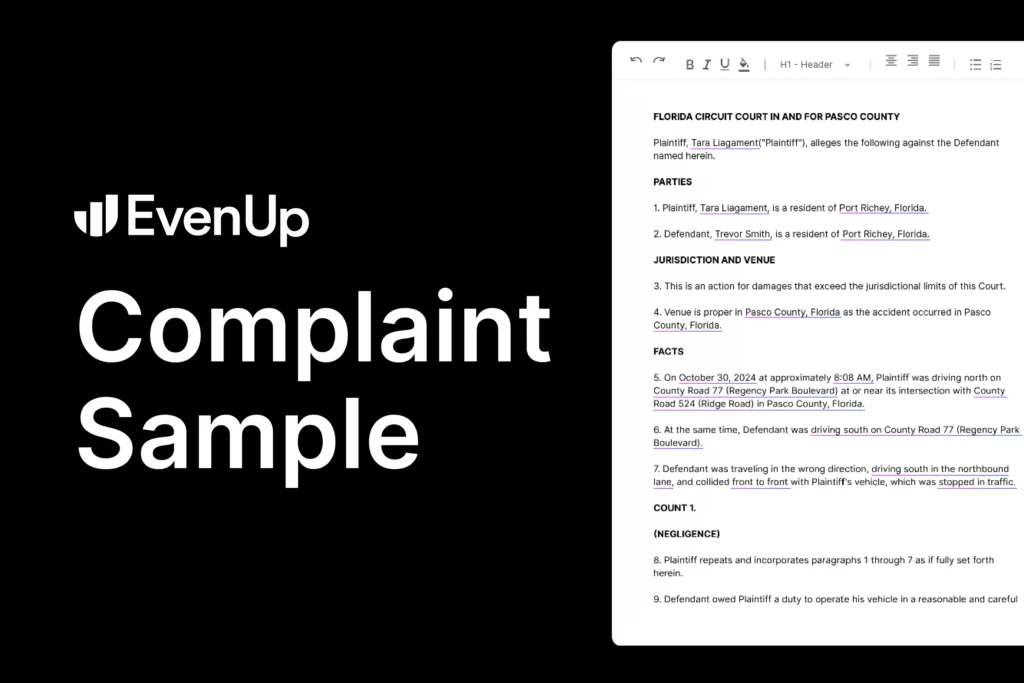
Personal injury complaint letter is a formal notice sent to a responsible party after an injury occurs. They are critical components of a case, which is why we’re providing this sample complaint letter example.
Letters of complaint should follow successful complaint letter examples that clearly document the event, injuries, and intent to pursue compensation.
Make sure you and/or your team are referencing proven sample complaint letter examples. This will help provide speed and consistency. It also sets the stage for your eventual legal AI platform, such as EvenUp.
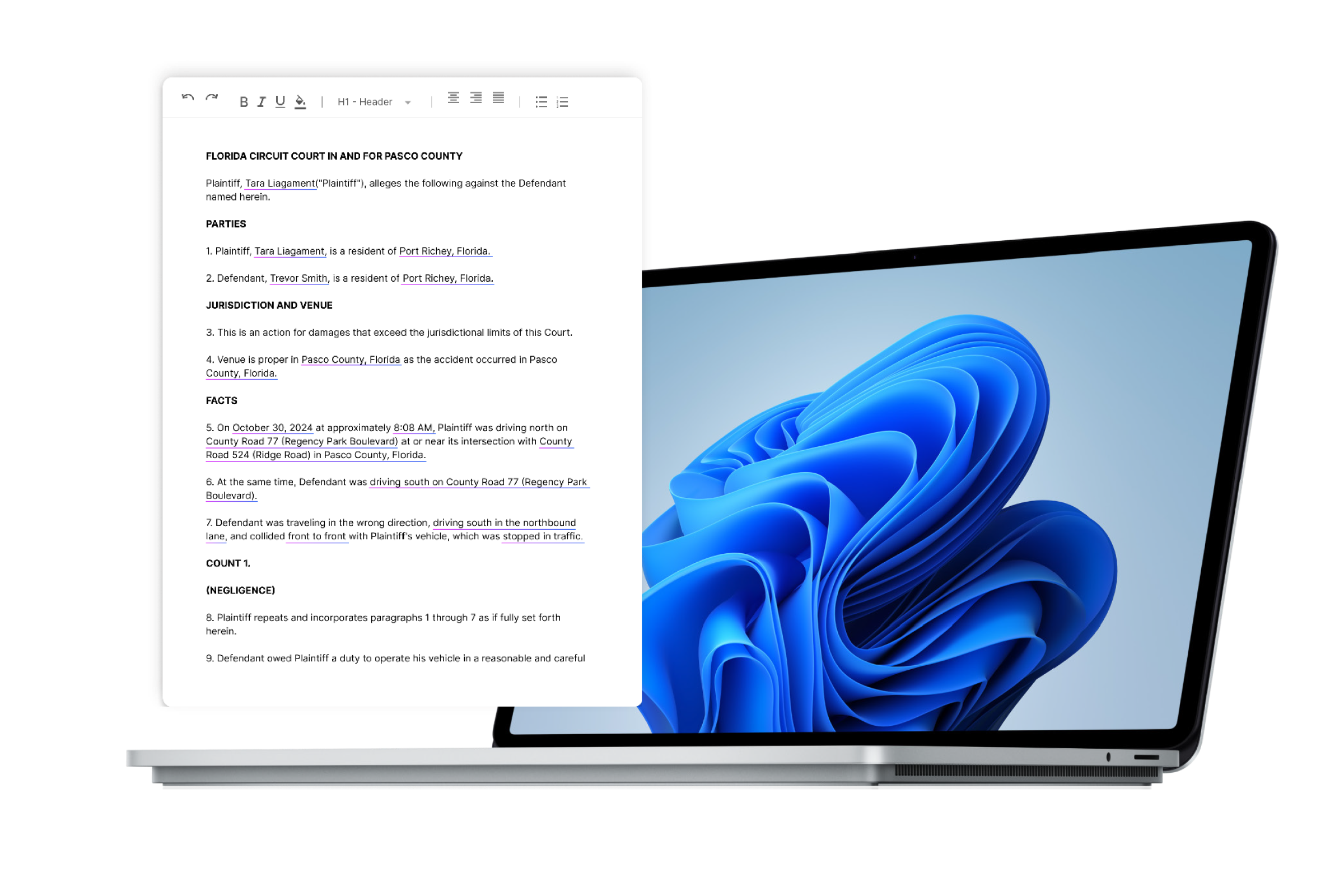
Unlike a casual report or phone call, a formal complaint letter creates a documented record of the incident. This record can become important evidence if the matter later proceeds to an insurance claim or lawsuit.
Effective complaint letters are often used in cases involving:
A well-organized injury complaint letter follows a clear legal-style structure.
Begin with your full name, mailing address, phone number, and email at the top of the page. This ensures the recipient can respond formally.
If you are represented by counsel, the attorney’s contact information should appear instead.
Include the date of the letter. Then list important details, such as:
Whenever possible, address the letter to a claims adjuster, risk manager, or business owner rather than a generic department.
Your subject line should clearly identify the incident.
Examples:
Clarity ensures the letter is routed properly and taken seriously.
The body typically includes four key components:
State what happened in factual terms. Include the date, time, and location of the injury.
Example: “On March 15, 2025, at approximately 3:30 PM, I slipped on an unmarked wet floor near the entrance of your downtown store.”
Describe the injuries sustained and any medical treatment received. Be factual and specific.
Example: “As a result of the fall, I suffered a fractured wrist and lower back strain requiring emergency care and ongoing physical therapy.”
Explain how the injury has affected your daily life, work, or finances. This may include:
State what you are requesting. At this stage, that may include:
A complaint letter is often the first step before sending a formal demand letter.
End professionally:
Sign above your typed name (for mailed letters) and include firm letterhead and signature blocks.
Attach copies—not originals—of supporting evidence, such as:
Documentation strengthens credibility and preserves the record.
Collect medical records, photographs, witness information, receipts, and any prior communication. Accurate documentation improves clarity and reduces disputes later.
Send the letter to the appropriate business owner, insurance carrier, or claims department. If liability is unclear, legal counsel can help determine the proper party.
Optimize how you write the letter by avoiding emotional language. Stick to objective facts about the incident and injuries.
Include medical treatment, missed work, and other measurable losses. Even if full damages are not yet known, document what has occurred so far.
Ask for confirmation of receipt and next steps within a reasonable timeframe (typically 14–30 days).
In premises cases, you may request that surveillance footage or maintenance logs be preserved to avoid spoliation.
A complaint letter notifies the responsible party of the incident and injuries. A demand letter formally requests monetary compensation and may threaten legal action.
A sample complaint letter format includes contact information, date, recipient details, subject line, incident description, injuries, damages, and requested action. Using a structured complaint letter template improves clarity and legal effectiveness.
No. A sample letter of complaint provides notice of the injury. A demand letter formally requests compensation. A letter of complaint template is often the first step before escalation.
A standard complaint letter template may help, but a personal injury sample complaint letter example should include medical details, documented damages, and evidence preservation requests.
ChatGPT and similar tools use publicly available learning language models (LLMs). Anyone can use these general-purpose LLMs for many tasks. However, they may not have the depth needed for specialized tasks.