AI will not replace paralegals. It will replace the parts of your job you never wanted in the first place.
The best personal injury paralegals and case managers continually adapt to the latest technology to stay efficient and effective. Today, that means artificial intelligence. The overwhelming question many PI support professionals now have is: will AI replace paralegals? The short answer is no. But that does not mean roles will not evolve, just as if you ask will AI replace lawyers?
AI tools are empowering paralegals with newfound speed and accuracy in their case workups. Vertical AI platforms are easing worries about how accurate is legal AI.
For example, EvenUp is AI purpose-built for personal injury firms. It handles drafting legal documents, implementing legal workflow automation, and simplifying caseload management.
AI is not here to replace paralegals or case managers. It is here to make your job easier, faster, and more impactful.
Legal support roles are fundamentally human. You manage communication, organize chaos, track down critical documents, and keep cases on track. These responsibilities require judgment, empathy, prioritization, and adaptability. AI cannot replicate those.
What AI can do is handle the parts of your job that slow you down: repetitive document drafting, digging through medical records, identifying missing bills and records, and manually preparing medical chronologies. AI taking on these tasks frees you up to focus on high-value work. That means supporting attorneys, preparing clients, and keeping operations moving.
The Bureau of Labor Statistics projects little or no change in paralegal and legal assistant employment from 2024 to 2034. The BLS notes that AI may limit growth by making these workers more efficient at research and document preparation. Even so, about 39,300 paralegal openings are projected each year over the decade, mostly from turnover. Demand stays steady. AI is not eliminating these positions. It is shifting them toward higher-value work.
That is exactly what platforms like EvenUp were built to do.
Follow our comprehensive PI checklist to boost productivity, enhancing the speed and quality of your case work.
Get Checklist
The fear around AI often comes from not knowing exactly what it can and cannot do. Here is a clear breakdown of the specific tasks AI handles today in personal injury firms, and how the work changes for paralegals and case managers.
| Task | Manual Process | How AI Changes It |
|---|---|---|
| Document Drafting | Hours spent manually compiling demand letters, medical summaries, and case documents from scratch. | AI generates full drafts in minutes from case data. You review and refine instead of writing from a blank page. |
| Medical Record Review | Scrolling through hundreds of pages of PDFs to find diagnoses, treatments, and providers. | AI extracts and organizes medical events, bills, and providers into an interactive care timeline automatically. |
| Case Intake Screening | Manually reviewing every new file, entering data, and assessing case potential. | AI reviews incoming files the moment they hit the CMS. Key facts are extracted. The case is staged before you log in. |
| Missing Document Identification | Chasing records by phone and email. Hoping nothing falls through the cracks. | AI flags missing bills, records, and treatment gaps in real time. Communication Agents handle outreach automatically. |
| Chronology Preparation | Manually building timelines from scattered records, often taking hours per case. | AI produces visualized chronologies from the full case record in minutes. |
| Client Communication | Calling carriers, checking in on treatment, verifying balances, one call at a time. | AI voice and SMS agents handle routine calls and texts. Summaries and transcripts are delivered to your inbox. |
Across all these tasks, AI handles the repetitive work. You keep the work that requires judgment, relationships, and strategic thinking.
AI is powerful at processing data, organizing records, and drafting documents. It is not capable of replacing the skills that make paralegals and case managers indispensable.
Client relationships require empathy, trust, and nuance. A paralegal who knows when a client is struggling or when a family needs extra communication provides value no algorithm can match. Strategic case thinking, the ability to spot issues before they become problems, and the judgment to prioritize one case over another are inherently human.
Courtroom preparation, attorney collaboration, and witness coordination all depend on experience and interpersonal skill. These are the parts of the job that grow more important as AI handles the rest.
AI does not replace your role. It removes the busywork so your expertise gets the time it deserves.
The paralegals who thrive with AI are not the ones who resist it. They are the ones who learn to direct it. AI amplifies your skills. It does not replace them.
A 2023 Goldman Sachs report estimated that AI could automate about 44% of legal tasks. The rest still needs human judgment and client relationships. That remaining work is where your value grows. It is worth investing in.
Four skill areas matter most.
| Skill Area | Why It Matters More With AI | How to Build It |
|---|---|---|
| AI and Legal-Tech Proficiency | AI handles the first draft. Someone still has to prompt it well and check the output. That someone is you. | Practice writing clear prompts. Learn to review AI drafts for accuracy. Get trained on your firm’s legal AI tools. |
| Data and Medical-Record Analysis | AI surfaces facts fast. Spotting what actually drives case value still takes a trained eye. | Study how injuries, treatment, and billing connect. Learn to read an AI-built care timeline critically. |
| Project and Caseload Management | As AI clears the busywork, paralegals take on more cases and more coordination at once. | Build systems for tracking deadlines and priorities. Own the workflow across every case stage. |
| Client-Facing Soft Skills | AI cannot reassure a worried client or read a room. Empathy stays human. | Sharpen your communication. Practice active listening. Lead the moments that need a person. |
The idea of using AI in your day-to-day work can feel intimidating. But you do not need to be tech-savvy to benefit. And you do not have to change everything overnight.
Here is how EvenUp recommends support teams get started.
Are you spending too much time drafting? Is record tracking chaotic? Start with the parts of your workflow that feel repetitive or stressful. Write down the three tasks that eat the most time each week.
Start small. Many teams begin with AI Drafts or Companion and quickly expand once they see results. Pick the bottleneck that frustrates you most. Test AI there first.
EvenUp offers support, training, and onboarding to help your team learn the tools fast. The goal is adoption without disrupting your day-to-day work. Ask about dedicated onboarding sessions for your role.
Notice how long tasks take with AI compared to without it. You will likely find that you are getting more done in less time, with fewer errors. Document the time savings so your firm sees the value.
Once you are confident, look at the larger picture. How can AI help your whole team reduce burnout, meet deadlines, and hit case goals faster?
Paralegal AI Readiness Checklist:
EvenUp is designed to support people like you. The more you use it, the more time you win back.
EvenUp is built specifically for personal injury law firms. Unlike generic tools that force you to adapt your process, EvenUp fits into your daily workflow so you can do your job faster and better.
With AI built on the largest personal injury dataset in the industry, EvenUp’s Claims Intelligence Platform does not just automate. It elevates your work by helping you:
Drafting demand letters, medical summaries, or other documents can take hours. Every case has its own set of facts, injuries, and providers.
AI Drafts changes the game. This tool uses generative AI to automatically create high-quality legal documents based on each case’s data. That means you can:
The result is less time formatting and copying notes. You gain more time to review for accuracy and impact.
AI Drafts does not remove your role. It empowers you to work faster, smarter, and with fewer errors.
How much time would you save per case with automatically generated summaries of the critical details within all your case files?
Proactive Workflows offers legal workflow automation that analyzes all your case files. It identifies and extracts critical details and insights from each new uploaded document. The programmable workflow automation supports every phase of the personal injury lifecycle:
For paralegals, you are not being replaced. You are being well-equipped to make consistently faster, smarter decisions across all your cases.
If you have ever juggled hundreds of case files, medical records, and status notes at once, you know how overwhelming it can be.
Companion makes it manageable. This AI-powered legal assistant helps you:
Instead of starting every file from scratch, you get a head start. You gain confidence that no important detail has slipped through the cracks. It is like having an extra pair of eyes that never miss a beat.
Burnout is a real issue for legal support professionals. As caseloads grow and demands increase, paralegals and case managers are often stuck doing more with less time and less support.
EvenUp offers a better way.
EvenUp’s Claims Intelligence Platform helps reduce manual, repetitive work by handling document generation, extracting and organizing case details, and surfacing critical information when you need it.
That means:
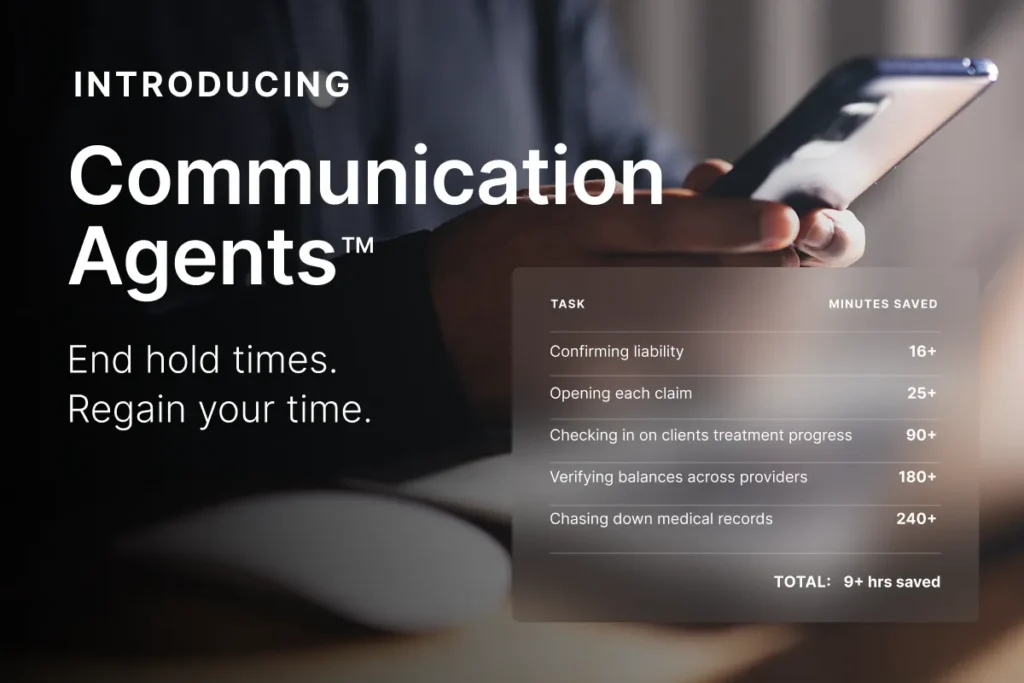
Firms using EvenUp report concrete results. Medical Management alone recovers an average of $1,500 per case in previously missing documents. Communication Agents eliminate hours of repetitive phone calls by handling insurance claim openings, record chasing, and client check-ins automatically. Across thousands of firms nationwide, teams are processing cases faster with fewer missed details. According to the 2024 ABA Legal Technology Survey Report, AI use among attorneys nearly tripled in a year. It rose from 11% in 2023 to 30% in 2024.
The difference between surviving a growing caseload and actually scaling is whether your tools absorb the repetitive work or just add to it. Vertical AI, built for personal injury, does the absorbing.
So, will AI replace paralegals? No.
But it will replace some of the tedious, repetitive work that has been holding you back.
With the right tools, like EvenUp’s AI Drafts, Proactive Workflows, Companion, and full Claims Intelligence Platform, you can do your job faster. You gain greater accuracy and less stress. You will spend less time buried in PDFs and more time doing the high-impact work that drives real results for your team and your clients.
Because when AI supports paralegals and case managers, the whole firm wins.
Schedule a call today to see how EvenUp’s AI tools automate repetitive tasks, streamline custom drafting, and empower staff to focus on case strategy and client engagement.
Schedule a Call
No. AI automates repetitive tasks while paralegals keep the judgment-based work that cases depend on.
No net elimination is expected. The BLS projects little or no change from 2024 to 2034, with about 39,300 openings a year. The role is shifting toward higher-value work.
Drafting, medical-record review, chronology prep, intake screening, missing-document detection, and routine client communication.
Start with one bottleneck. Choose purpose-built legal AI. Get training. Track the time you save.
AI and legal-tech proficiency, data analysis, project management, and client-facing soft skills.