A pre-litigation team in personal injury cases is responsible for seven pre-litigation processes: intake and case evaluation, medical record collection, treatment monitoring, medical chronology building, demand letter drafting, client communication, and case management. Each of these pre-litigation stages directly influences settlement value, and the quality of execution across all seven determines how much a firm recovers for its clients.
Most cases settle during this phase. The pre-litigation team’s work is not support work. It is the primary driver of case outcomes.
This guide breaks down each core responsibility of a modern pre-litigation team. It showcases the key pre-litigation stages and shows how the best teams execute them faster, with fewer errors, and at higher value.
If you’re wondering what does a pre-litigation team do for personal injury cases, the answer may be quite boring. Most personal injury teams follow the same processes and tasks throughout the pre-litigation stage.
| Function | What the Team Does | Risk of Getting It Wrong |
| Intake and Case Evaluation | Extracts key facts, verifies coverage, flags case strengths and risks | High-value cases missed; red flags surface late |
| Medical Record Collection | Requests, tracks, and organizes records across all providers | Cases stall; demand preparation delayed |
| Treatment Monitoring | Tracks compliance, flags gaps, and checks in with clients proactively | Adjusters use gaps to justify reduced offers |
| Medical Chronologies | Builds structured treatment timelines linked to source documents | Disorganized records invite scrutiny and discount |
| Demand Letter Drafting | Produces benchmarked demand packages ready for attorney review | Underprepared demands anchor negotiations too low |
| Client Communication | Delivers consistent updates and treatment check-ins at scale | Inconsistent communication drives client loss and complaints |
| Case Management | Connects all functions in a single system with clear ownership | Fragmentation creates handoff failures and compounding delays |
Only a select few personal injury claims go into litigation. The vast majority are resolved during the pre-litigation phase. That makes this stage the most resource-intensive period in the life of a case.
Yet many firms treat pre-litigation as a holding pattern. They assign it to junior staff. They rely on manual tracking. Real attention only comes once litigation begins. This is backwards. The quality of pre-litigation work directly determines settlement outcomes. A well-organized file with complete records, strong evidence, and a compelling demand package commands higher offers.
The gap between firms that invest in pre-litigation and those that do not is measurable. Firms deploying AI communication workflows in pre-litigation have expanded operational capacity 2.5x within the first 90 days, handling more active cases at higher quality without adding headcount. That is not a technology story. It is a pre-litigation operations story.
Every pre-litigation case starts with intake. In most firms, the process is manual: a paralegal reviews the file, enters data into the case management system, and flags obvious issues. Inconsistency is unavoidable at volume. One paralegal catches a prior incident that changes case value. Another does not. The variance is not a personnel problem. It is a process problem.
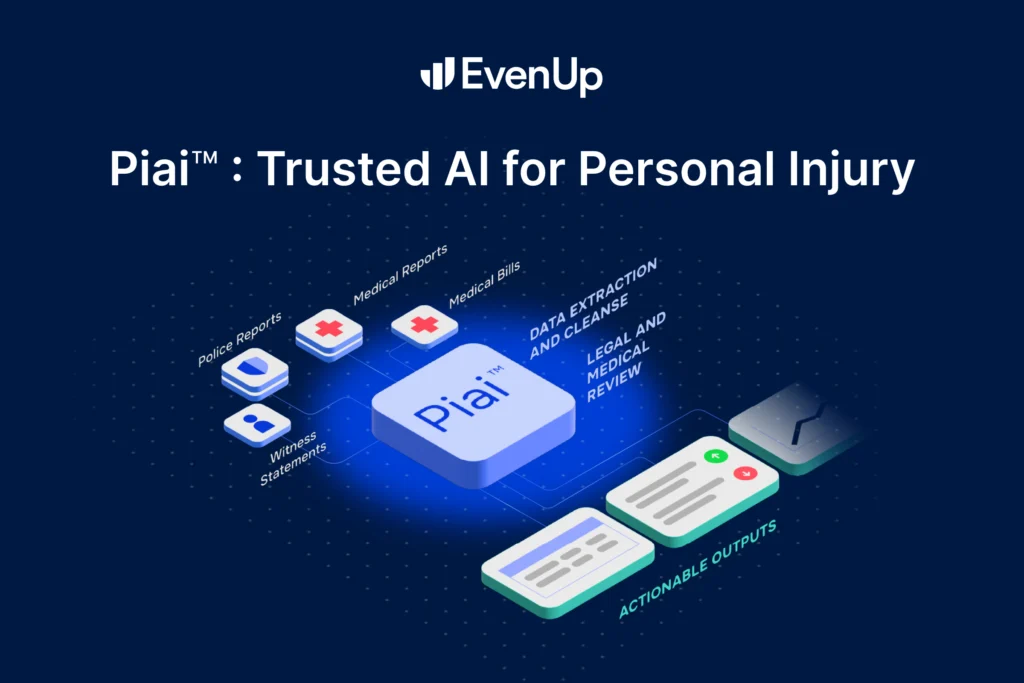
High-performing pre-litigation teams use AI to analyze case files the moment they enter the system. Key facts are extracted, insurance coverage verified, and case strengths and weaknesses surfaced before the first staff member opens the file. High-value cases get prioritized on day one. Problems that once emerged weeks into treatment get caught at intake instead.
Early analysis also changes how teams handle risk. Red flags like prior incidents, pre-existing conditions, or liability disputes surface before they become negotiation surprises. EvenUp’s Proactive Workflows automate this review across the entire intake queue, creating a consistent standard regardless of who is handling the file.
Medical record collection is where most pre-litigation delays happen. The process is inherently fragmented: providers respond on different timelines, records arrive in pieces, and staff spend hours tracking down missing pages or following up on requests that have gone unanswered for weeks.
The problem compounds at scale. A pre-litigation team managing 200 active files might have 40 cases stalled on a single missing record at any given time. Each delay pushes back treatment monitoring, demand preparation, and ultimately settlement. The administrative overhead is not just inefficient. It is a direct drag on case value.
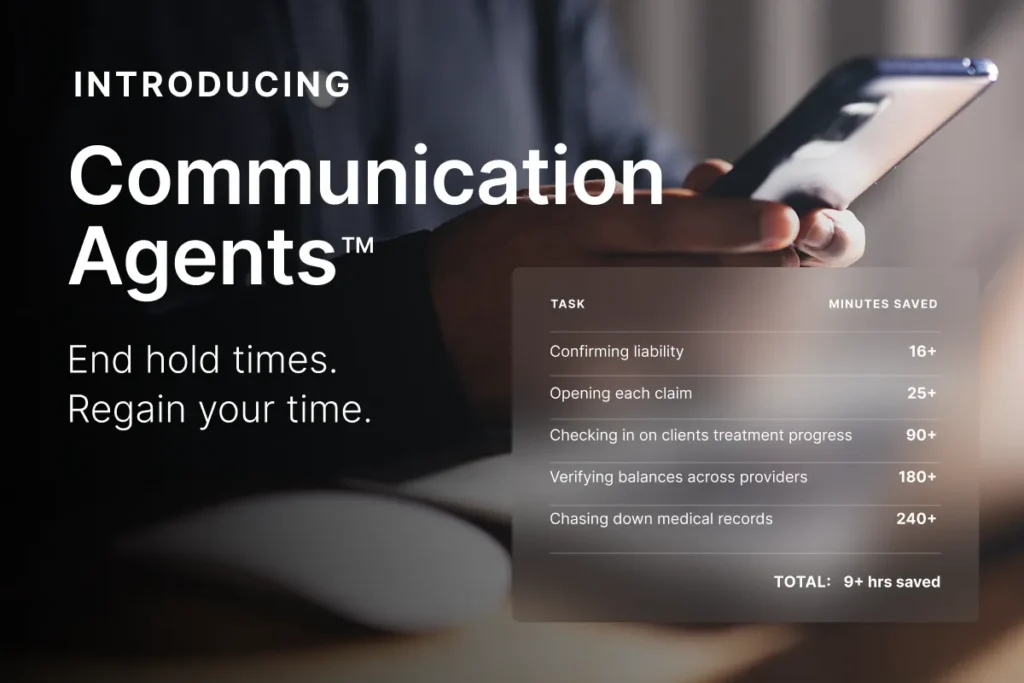
Automation changes the math. AI voice and SMS assistants reach out to medical providers, verify balances, and chase missing records in parallel across the full caseload, handling the repetitive follow-up that previously consumed hours of staff time each day.
EvenUp’s Communication Agents run this workflow continuously, so record completion no longer depends on who has time to make calls.
Treatment gaps are one of the most reliable ways adjusters reduce settlement offers. A client who stops physical therapy for six weeks, misses appointments without explanation, or fails to follow through on a referral gives the defense an easy argument: the injuries were not severe enough to justify the claimed damages. By the time the pre-litigation team notices, the damage to the file is already done.
The challenge is visibility. Most teams are managing too many active cases to monitor treatment compliance manually. A case manager might check in on a client once every few weeks, if at all. Gaps accumulate unnoticed until records are requested and the timeline tells the wrong story.
Continuous monitoring solves this before it becomes a file problem. AI communication agents surface treatment issues proactively at scale. In one documented rollout, proactive AI check-ins caught issues early in 37% of client conversations. Those were problems the team did not know existed until the system flagged them.
EvenUp’s Treatment stage offerings provides this visibility across every active case in real time, flagging treatment gaps and missing records before they reach the demand stage.
A medical chronology is a structured timeline of a plaintiff’s treatment history: diagnoses, providers, procedures, and recovery milestones organized in sequence. It is the document adjusters and opposing counsel rely on most heavily when evaluating a claim. A well-built chronology tells a coherent damages story. A disorganized one invites scrutiny.
Building chronologies manually is a significant time investment. A paralegal working through a complex, multi-provider case might spend an entire day cross-referencing records, identifying diagnoses, and organizing entries by date. At volume, that is not a sustainable model.
EvenUp’s MedChrons and AI Drafting platform transforms raw medical records into structured, interactive timelines. AI extracts diagnoses, highlights key procedures, and generates exhibit lists. An expert review team verifies accuracy before the final product is delivered. The result is a litigation-ready chronology attorneys can use directly in negotiations or hand to mediators, without the paralegal hours behind it.
The demand letter is the single most important document the pre-litigation team produces. It presents the full case for damages and sets the anchor for everything that follows. A weak demand signals to the adjuster that the firm has not done the work. A strong one, backed by organized records, a complete treatment timeline, and benchmarked damages calculations, changes the negotiation dynamic before the first call.
Most demand letters underperform not because attorneys cannot write, but because the underlying file is incomplete. Missing records, undocumented gaps, and unsupported damages figures all reduce the credibility of the number being asked for. The demand is only as strong as the pre-litigation work behind it.
AI-assisted demand preparation addresses this at the production level.
EvenUp’s Demands products ingests medical records, extracts and categorizes injuries, and generates comprehensive demand packages benchmarked against verdict and settlement data. Expert demands are reviewed by legal experts for accuracy, such as in the pain and suffering arguments, before delivery. Where as Express Demands are generated by purpose-built AI in minutes.
Knowing what a pre-litigation team should do and having the capacity to do it consistently are two different problems. Most PI firms hit a point where the gap between the two starts costing them.
The signals are recognizable. Cases are being referred out because the team does not have bandwidth. Settlement timelines are lengthening as caseloads grow. A case manager leaves and 80 files go into a holding pattern while the firm hires and retrains. Quality varies depending on who is handling the file. The firm is spending more time managing its pre-litigation operation than improving it.
The underlying cause is structural. Hiring solves capacity temporarily. It does not solve consistency, and it does not eliminate the ongoing cost of training, managing, and replacing staff.
Outsourcing work to pre-litigation services addresses this at the root. The right partner does not just add capacity. It brings standardized workflows, continuous quality oversight, and a service model that improves over time rather than degrading when someone walks out the door. The compounding effect matters: a well-run outsourced operation gets better the longer it runs, because the training and performance management are owned by the partner, not the firm.
The financial case is equally direct. Cases that previously had to be referred out due to capacity constraints stay in-house. Referral splits stop. A flat, predictable per-case fee replaces the unpredictable cost of staffing.
EvenUp’s PLAAS is built specifically for this scenario. Cases that were sitting in poor condition have been moved to settlement in as few as nine days.
| In-House Team | EvenUp PLAAS | |
| Scalability | Limited by hiring and training cycles | Capacity added in days |
| Cost structure | Variable: salary, benefits, turnover costs | Flat fee per case |
| Quality consistency | Varies by individual | Standardized workflows across every file |
| Referral splits | Required when team is at capacity | Eliminated — cases stay in-house |
| Improvement over time | Depends on firm’s training investment | Built into the service model |
| Time to demand | Dependent on staffing levels | Reduced by three months on average |
Glen Lerner, Founding Partner of Lerner and Rowe, describes the firm-level impact directly:
"EvenUp delivers better case development and moves them off the desk sooner, freeing up our best people to get more value on our biggest cases. I'm getting a better product, making more money, and providing a better service to my clients."
Glen Lerner
The firms that pull ahead will not be the ones that hire their way out of the problem. They will be the ones that figured out how to scale expertise itself.