EvenUp Law
March 28, 2025
Most firms know how to value a personal injury case, but not many have a few uninterrupted hours per case required to do it properly at intake.
That’s the real constraint. Valuation isn’t a knowledge problem, it’s a timing problem. An undervalued case anchors low and stays there. An overvalued one stalls in negotiation while the client waits.
The firms valuing cases well aren’t spending more hours per file. They’ve moved the assessment earlier, so the facts that determine value are established while there’s still time to act on them.
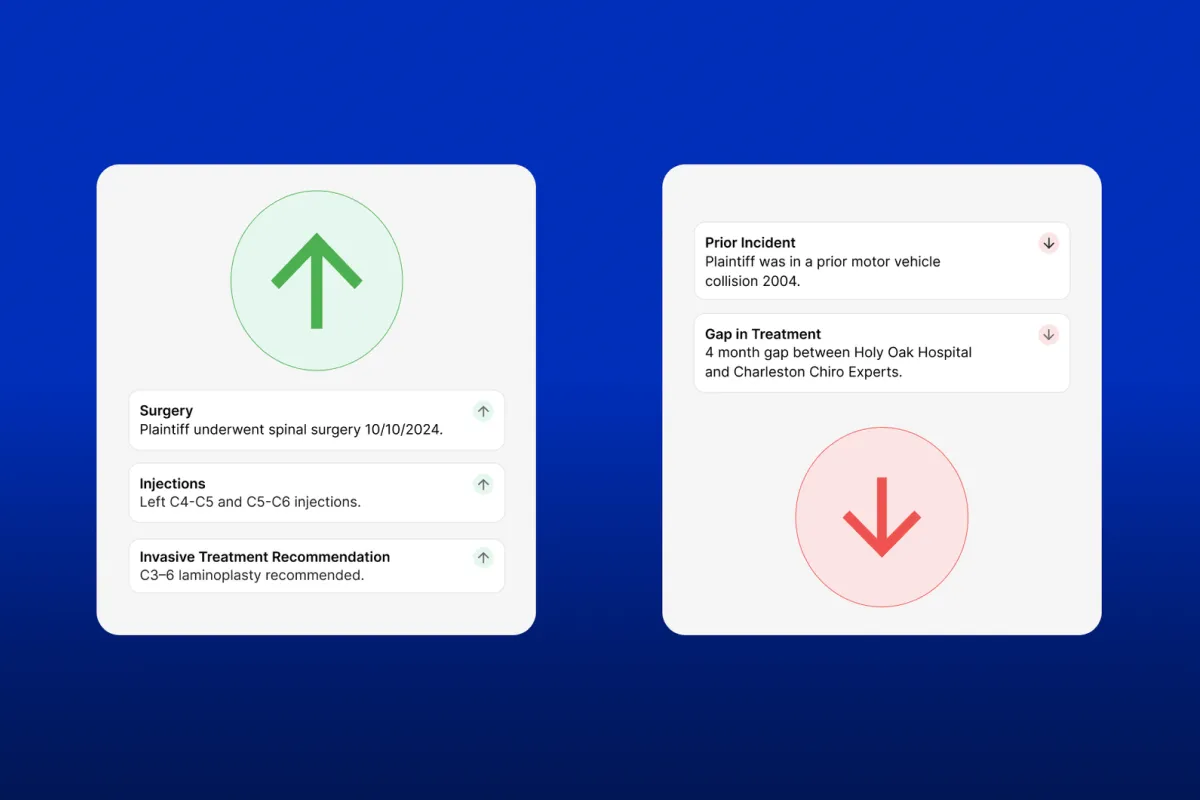
Three categories carry most of the number.
None of that is unfamiliar to an experienced attorney. The difficulty is applying it consistently across a full caseload, early enough to matter.
Get a real-world look at how PI firms are putting AI to work across the full case lifecycle, including intake, medical management, litigation, and settlement strategy.
Watch Now
In most firms, real valuation happens when the demand gets drafted. That’s the point where someone finally reads the whole file end to end.
By then the facts are fixed. A treatment gap that opened four months ago can’t be closed retroactively. A missing bill that never made it into the file lowers the economic damages claim whether or not anyone noticed it was absent. Coverage that turned out to be lower than assumed reframes the entire strategy after the strategy was already set.
Everything that determines the number gets decided during the case. The valuation just arrives afterward to describe what happened.
Moving it earlier is the whole opportunity, and it’s what AI has actually changed.
You can’t value a case accurately without knowing what you’re working against, and coverage is usually the slowest fact to establish.
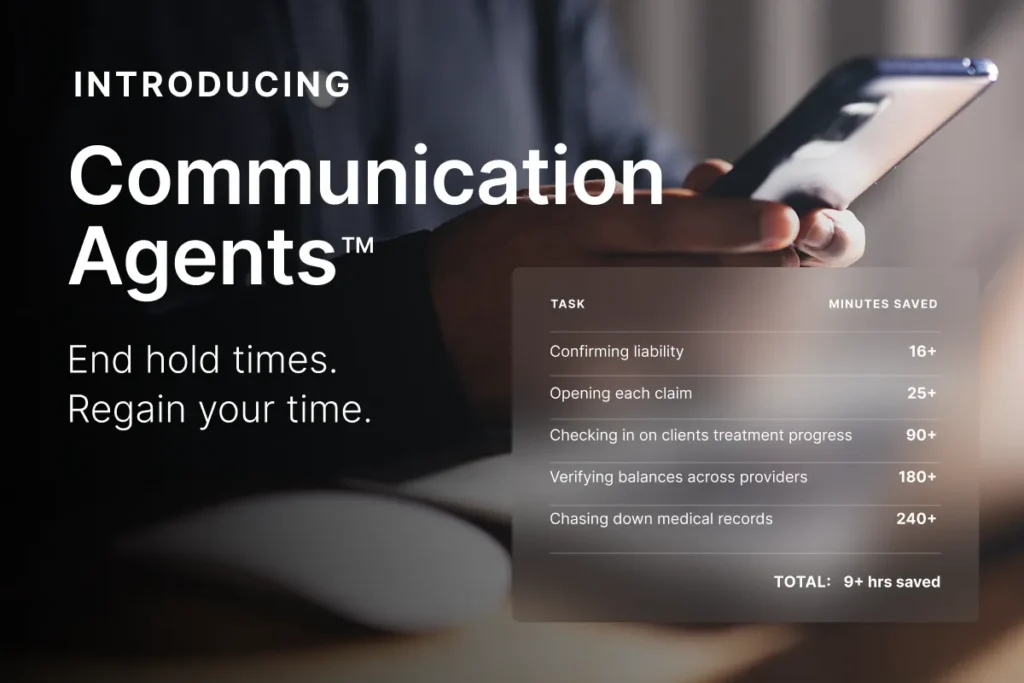
AI Communication Agents handle that work directly. Once a client is signed, agents call carriers to open claims and get adjuster assignments, opening 5x more claims than a team working the phones alone. They also contact carriers to confirm liability and coverage, then deliver written confirmation to the team, saving 16 or more minutes per case on coverage checks.
That sounds like an administrative win, and it changes the valuation timeline. Coverage established in the first days of a case means every downstream decision, including how hard to push treatment documentation and whether policy limits are the real ceiling, gets made with the constraint known rather than assumed.
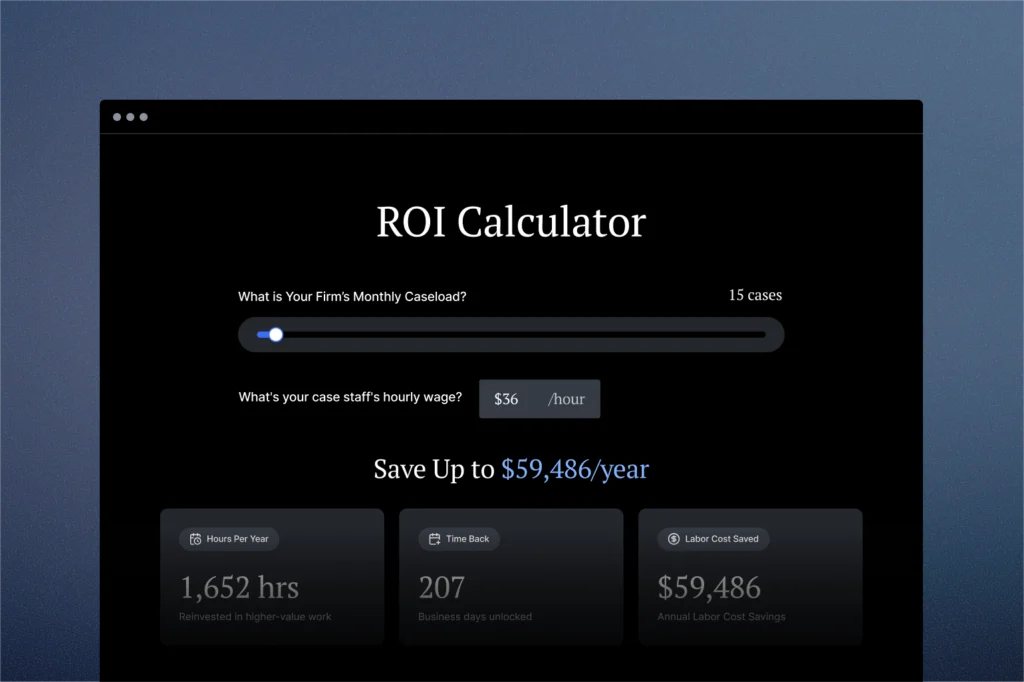
Enter your case load and turnaround times to see where capacity is going. Results are free, no form required to start.
Calculate Now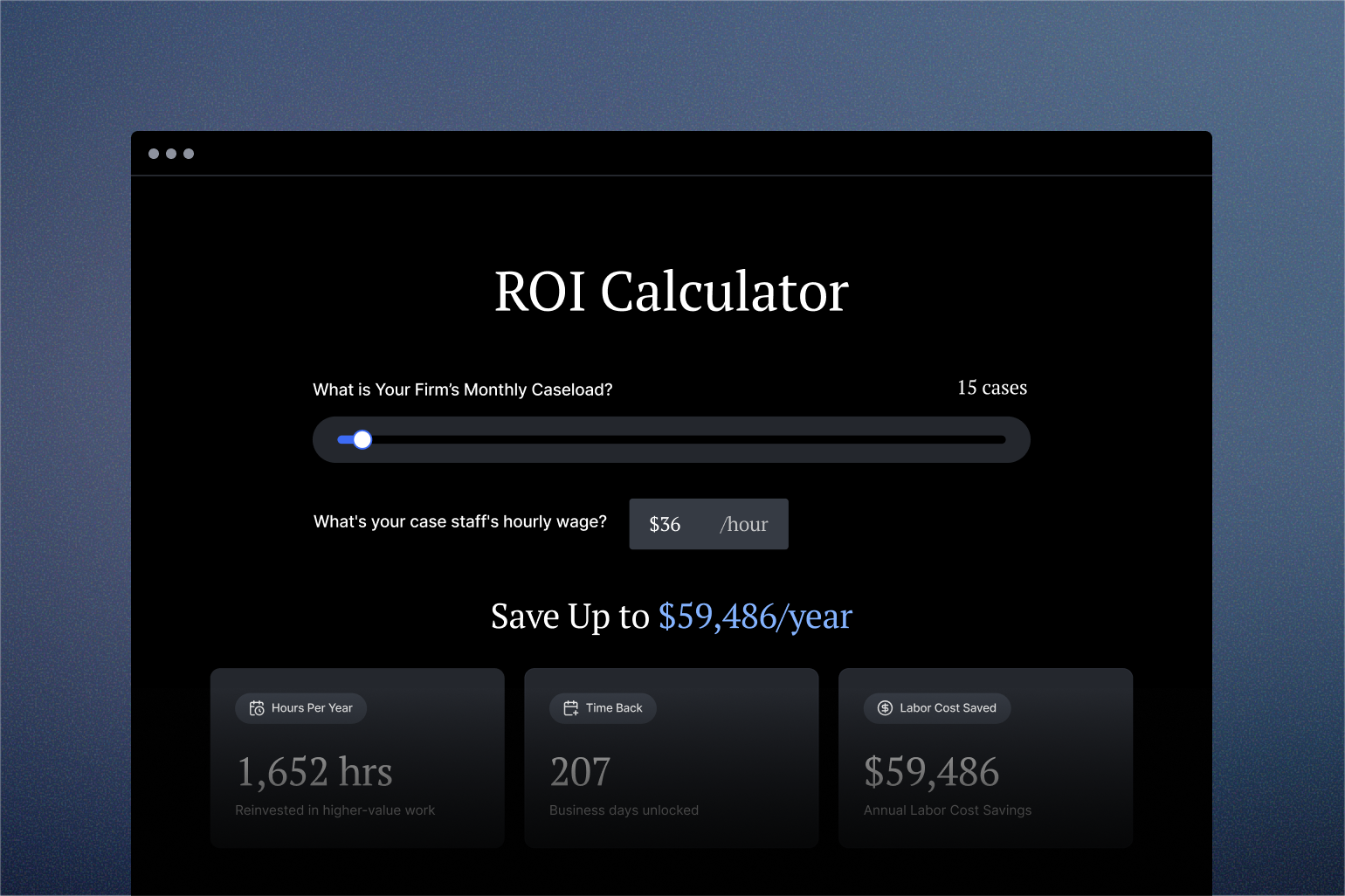
The second problem is finding what’s valuable in a file nobody has fully read yet.
AI Playbooks read case files as they arrive and automatically detect key value drivers, including undiagnosed traumatic brain injuries, commercial policies, and a firm’s own custom criteria, so the most valuable cases are identified early rather than during demand prep. They also work the other direction, surfacing disqualifying factors such as DUI indicators or weak liability, so a team spends its hours on cases worth pursuing.
There’s a third use worth knowing about. Playbooks mine existing files, transcripts, and documents to uncover case opportunities already sitting in a docket, including employment, workers’ compensation, asbestos, and emerging mass torts. Value that was already there and nobody had time to look for.
A case is worth what you can document, which makes missing documentation a valuation problem rather than an administrative one.
Case Preparation flags missing medical bills and records directly from raw documents before a demand is ever written. A care timeline gives a full view of each client’s treatment history, upcoming care, medical expenses, and communications, which makes treatment gaps visible while they can still be addressed. Case financials total treatment costs so medical expenses don’t quietly exceed policy limits. And an editable medical bills summary turns scattered billing into a comprehensive economic damages claim.
Firms using EvenUp to identify missing medical bills or records see an average increase of $1,125 per case, which is roughly $400,000 in annual cash flow for a firm handling 30 cases a month.
Valuation isn’t only about what raises a number. It’s about what the other side will use to lower it.
Case insights surface value-enhancing evidence directly from the case files, so a negotiation strategy is built on what’s actually in the record. Just as usefully, they pre-identify weaknesses such as negative diagnostics and prior incidents, which means those arguments get answered before an adjuster makes them rather than during the call.
The difference between a firm that values cases well and one that doesn’t has less to do with legal judgment than with when that judgment gets applied.
Assess coverage in the first days. Surface the value drivers while the case is being worked. Find the missing documentation while it can still be obtained. Know the weaknesses before the adjuster does. Do all four and the number at the end is a valuation rather than a discovery.
Companion™ supports that throughout, providing real-time answers, analysis, and line-based evidence across the case lifecycle, so an assessment at intake and an assessment at negotiation draw on the same file.
Schedule a call today to see how EvenUp's AI tools automate repetitive tasks, streamline custom drafting, and empower staff to focus on case strategy and client engagement.
Schedule a call
Read Now

Read Now

Read Now

Read Now