If I could try a case every week, I would.
Litigation is the reason I became a lawyer. It’s the part of this work I’m built for, where I want to spend my time, and where my team is most effective.
The problem is that litigation alone doesn’t sustain itself. Personal injury firms need pre-litigation feeding the pipeline: opening claims, managing treatment, communicating with clients, gathering records, drafting demands. None of it is glamorous, but all of it matters.
For years, staffing that side of the business was one of the biggest operational headaches at my firm.
We’re based in Utica, New York. It’s not a massive legal market where experienced pre-lit talent is easy to find. Even when we hired great people, retention became a constant cycle. Someone gets trained, another opportunity comes along, and suddenly you’re rebuilding the department again while cases continue piling up.
That pressure forces many firms into two options: hire endlessly or refer cases out. So we did both, and neither was really solving the problem.
That’s what eventually led us to EvenUp’s Pre-litigation as a Service (PLAAS) model. Honestly, what caught my attention initially wasn’t the technology. It was the operational structure behind it.
Instead of continuing to build and rebuild an in-house pre-lit department, we were able to plug into a dedicated team already trained on PI workflows that could operate directly inside our systems while we stayed focused on litigation.
The straightforward answer when pre-lit volume grows is to hire. Build a pod. But finding the right people takes time. Keeping them is even harder.
We’ve lived through the cycle repeatedly. You finally get someone trained, they become effective, and then a bigger market firm comes in with a better offer. Suddenly, you’re rebuilding the department again while the cases keep coming. And even when you do staff successfully, you run into another problem: experienced people end up spending significant time on more routine files while higher-value cases compete for the same bandwidth.
The other option is to refer cases out. A lot of PI firms do it. Send the lower-value files to another firm, collect a referral fee, and keep your internal team focused on litigation. But that math is rough. At best, you’re getting a third of a third and giving up most of the fee on a case you originated and built the client relationship around.
More importantly, you lose visibility into the process. The case may leave your office, but it’s still a reflection of your firm. You no longer control how consistently the client is updated, how aggressively the file is worked up, or ultimately what kind of experience the client has.
That’s what made the PLAAS model interesting to me.
Instead of continuing to hire and rehire internally or sending cases elsewhere entirely, we were able to keep the cases and plug into a dedicated external pre-lit team already trained on personal injury workflows and operating directly inside our systems.
Our PLAAS team works directly inside our case management system alongside our in-house staff. They note files, upload documents, manage releases, and communicate through the same workflows we already use internally. Operationally, it feels much closer to an extension of our team than a traditional outsourced vendor relationship.
The economics became clear pretty quickly. Internally, we generally expect a minimum of around $800 per month in time-on-desk return on a file. In one recent case resolved through PLAAS at policy limits, that number came in closer to $5,000 per month.
To me, that’s really a reflection of focus. When cases are being worked consistently and proactively, outcomes improve.
What surprised me most, though, was the client experience.
Initially, I worried clients might feel disconnected once an external team became involved. You naturally assume the relationship could become less personal or more transactional. What we found was the opposite.
The PLAAS team built consistent communication directly into the process. Clients receive biweekly check-ins regardless of whether there’s a major update on the case. In practice, many of these clients ended up receiving more consistent communication than they would have otherwise simply because the team working the files had dedicated capacity to stay on top of them.
That consistency matters in personal injury law. Clients want to know their case hasn’t been forgotten.
Since shifting our pre-lit book of business to PLAAS, our litigation team has been able to operate the way we always intended.
Higher-value cases are getting more strategic attention. We’re moving cases faster, preparing more deliberately, and spending more time advancing cases rather than constantly managing operational bottlenecks.
That’s the kind of firm I want to build: litigation-focused, with a pre-lit engine that supports the work instead of pulling attention away from it. For us, the biggest shift was realizing we didn’t need to keep forcing a staffing model that no longer fit the realities of the market.
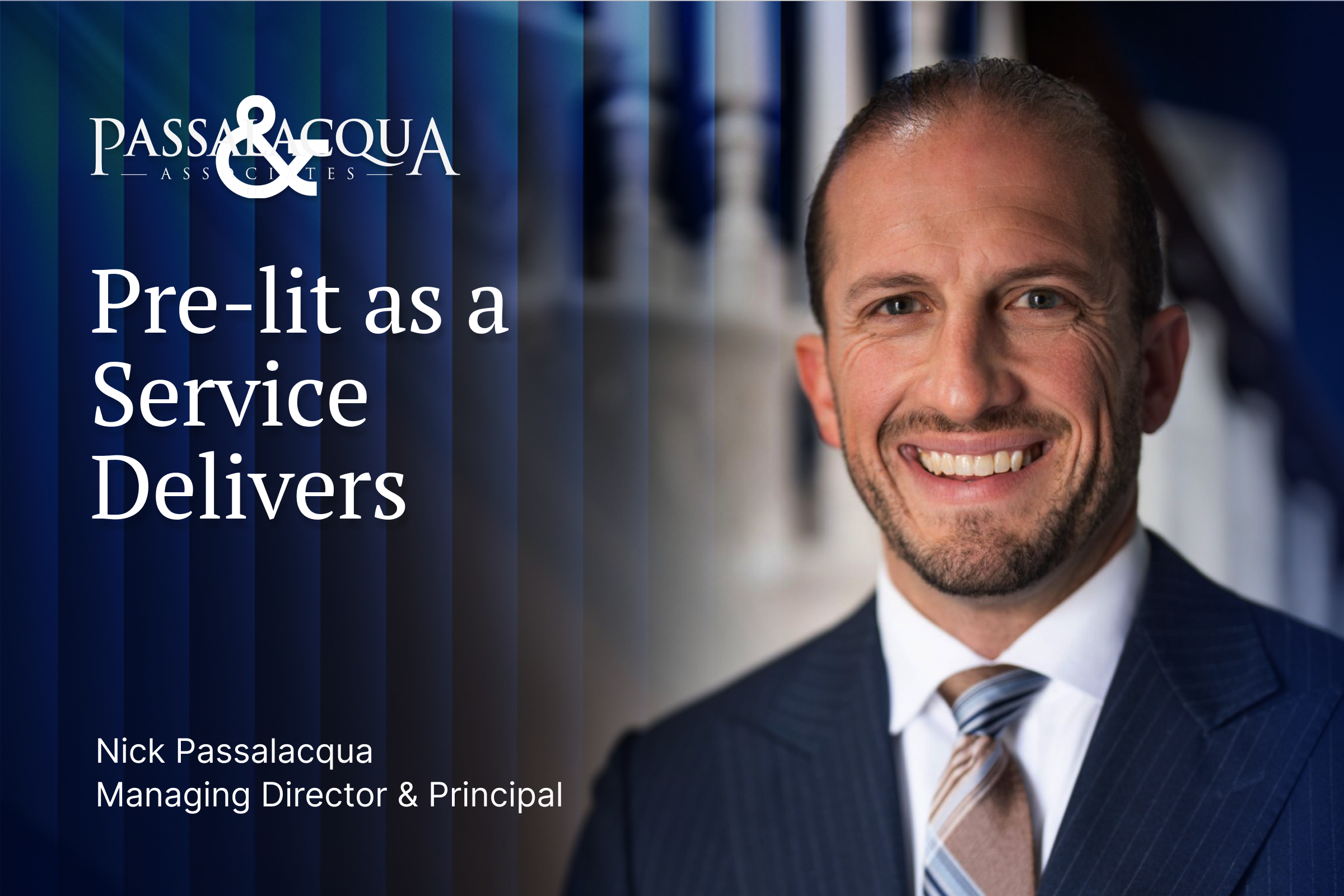
Nick Passalacqua is the Founder and Managing Director of Passalacqua & Associates, a personal injury and criminal defense firm based in Utica, New York.
Schedule a call today to see how EvenUp's AI tools automate repetitive tasks, streamline custom drafting, and empower staff to focus on case strategy and client engagement.
Schedule a call