EvenUp Law
July 27, 2026
“Agentic” may be the most overused word in legal AI today. Every vendor has it on their homepage. Almost none of them mean the same thing by it. And for firm leaders, that ambiguity isn’t just annoying. It’s expensive, because the difference between real agentic capability and repackaged marketing determines whether the tool you buy actually advances cases or just answers questions faster.
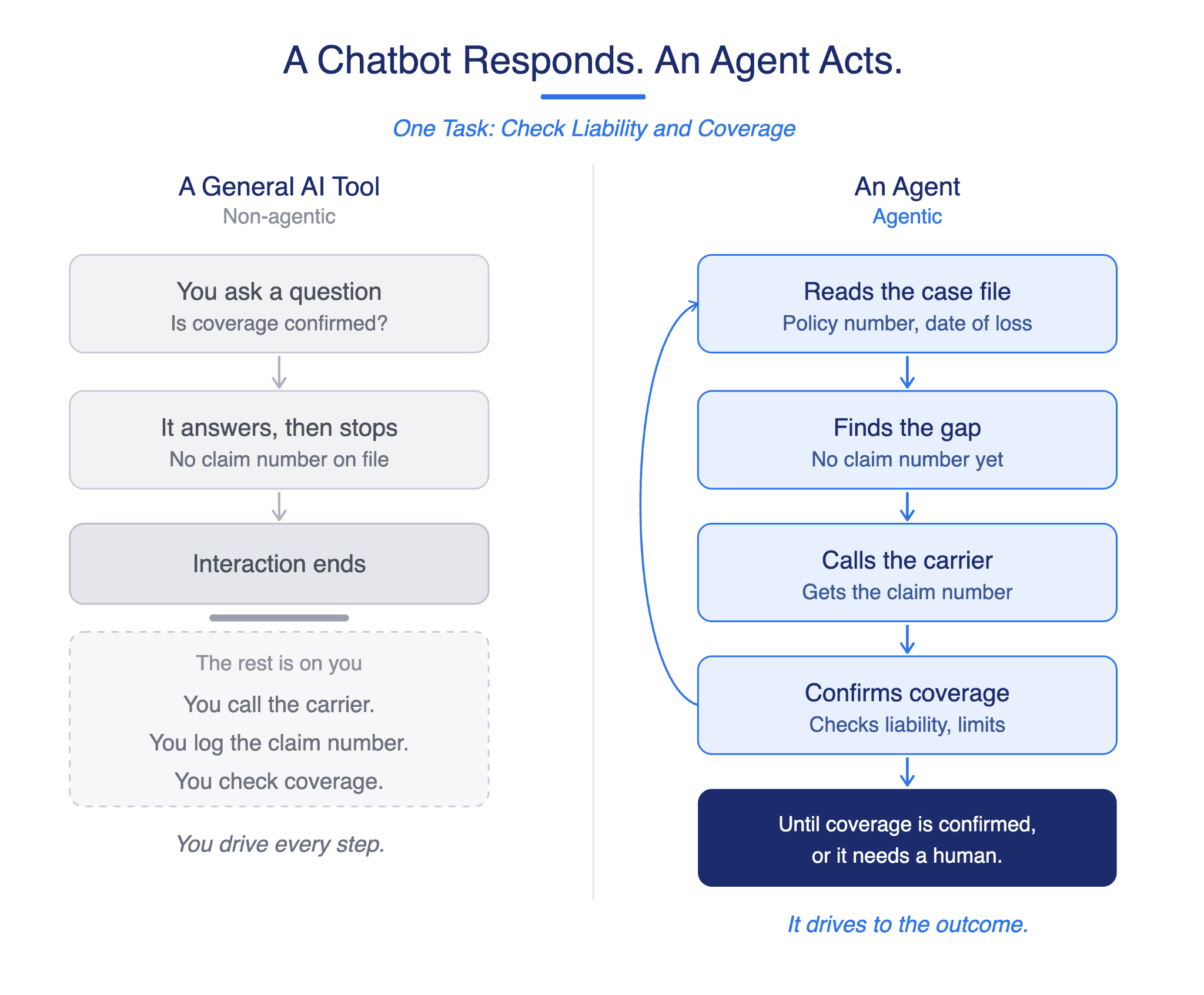
Here’s the core distinction: agentic AI doesn’t stop after producing an answer. It takes an action, checks the result, decides what comes next, and keeps going, without someone standing over it at every step.
For a personal injury firm, that’s the difference between software that summarizes medical records and a system that can actually carry a case through the long, tangled, multi-step work it demands.
The clearest way to see the difference isn’t in the first response. It’s what happens after.
Ask ChatGPT or Claude to summarize a medical record, and it gives you a summary. Then it stops. Now you’re the one deciding what happens next: who to follow up with, what to check, what to flag. The AI made one step faster. You’re still running the whole workflow.
An agent works differently. Give it a goal, and it works toward that outcome on its own, pulling the information it needs, evaluating what it finds, deciding what comes next, and continuing until the work is done or it hits something that genuinely needs a human’s judgment.
| A Chatbot | An Agent | |
| After the first output | Stops and waits for you | Evaluates the result and takes the next step |
| Who drives the process | You do | The agent does, until it needs you |
| What it works from | The document or prompt you give it | The case, its lifecycle, and what is missing |
| What it produces | A faster version of one step | Completed multi-step work |
| In a PI case | Summarizes a record you paste in | Opens the claim, verifies coverage, checks treatment, flags the gap, and follows up |
That distinction is everything in personal injury. Firms don’t get bogged down by single questions. They get bogged down by workflows that stretch across months and dozens of small decisions. That’s exactly the kind of work agents are built for.
Most legal AI products that call themselves agentic aren’t, really. Not because the branding is dishonest exactly, more because the underlying intelligence just isn’t there yet to act reliably on its own. Proactive automation only works if the AI understands the whole case, not just whatever prompt it was handed.
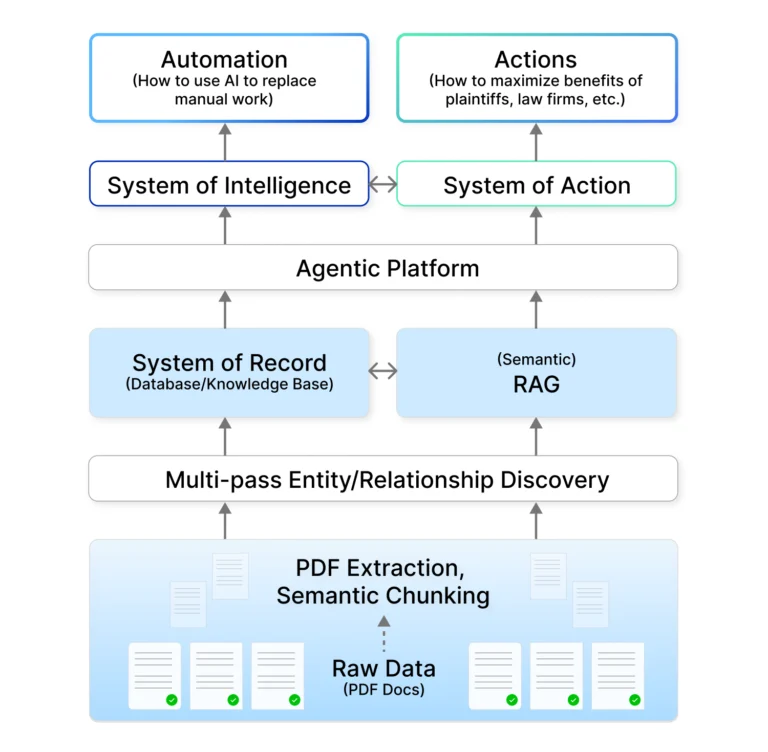
An agent can only take meaningful action if it understands the context surrounding that action. In personal injury, that means understanding the case, not the document in front of it. Where does this case sit in its lifecycle? What’s missing? What does the treatment timeline actually imply? What’s an adjuster likely to push back on, and what’s the next best move?
The agent is just the visible layer. A lot of vendors paper over what’s missing underneath with feature lists, or by rebranding a bundle of existing tools as an “AI platform” or “operating system.” But breadth of functionality isn’t the same thing as work actually taken off your team’s plate, and it’s worth asking which one you’re being sold.
So when you’re evaluating a claim of “agentic,” skip the demo and ask two questions instead: What does this agent actually understand? And how much of the case can it complete without a human stepping in?
Even an agent that genuinely understands the case still needs to know how your firm wants the work handled. This is the part of agentic AI that gets talked about the least, and it’s probably the part that matters most.
Every action an agent takes depends on your firm’s standards. When should a stale case be escalated? What has to be in every demand letter? At what point is a treatment gap worth flagging instead of just noting? Right now, your best attorneys, paralegals, and case managers hold those answers in their heads. For AI to take any of that work off their plate, that knowledge has to get written down, made explicit, not left as institutional memory.
So the capability worth demanding isn’t generic AI. It’s a way to capture your firm’s standards once, and have them applied consistently across every matter after that.
The payoff is delegation you can actually trust. Hand the same agent to two different firms, and the one that’s encoded its standards gets firm-grade work back. The one that hasn’t gets something generic.
As this space matures, a few capabilities keep separating real agents from polished demos:
A tool might check one of these boxes. Real infrastructure checks all five, because each one rests on the same foundation: an agent that understands the case and acts on your firm’s rules.
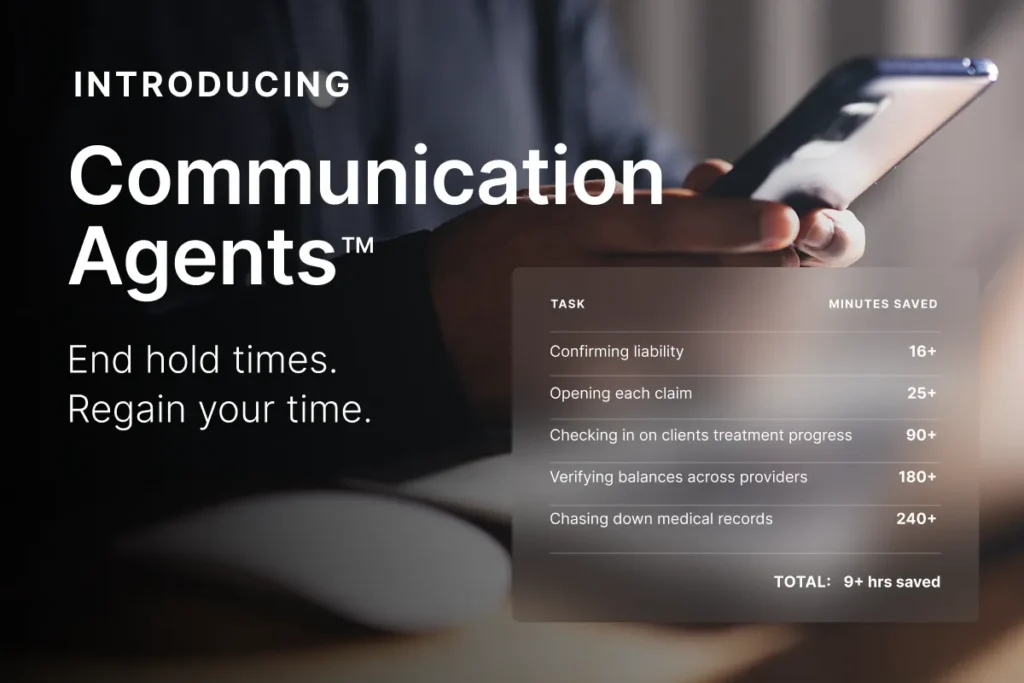
Today’s agents handle discrete, multi-step jobs: opening a claim, chasing records, confirming balances before settlement. The next phase of AI agents looks less like a tool that staff triggers and more like a new hire your firm assigns.
Picture a care-management agent watching records as they come in, catching a treatment gap the moment it appears, and routing the case straight to a demand-readiness agent, with no one logging in to check, no ticket to open. It reasons across the entire caseload, so a firm can simply ask what needs attention today and act on the answer. And it lives inside the tools your team already has open, email included.
The throughline is AI that adapts to how your firm actually runs, and speaks the language of whatever role it’s standing in for.
That’s really the difference between treating AI as a tool and treating it as infrastructure. A tool sits atop how the firm already works. Infrastructure changes the work itself, and it only does that when it has both an intelligence layer that can actually reason and a foundation of firm-specific rules to reason with.
Everything else is a chat window with ambitions.
Schedule a call today to see how EvenUp's AI tools automate repetitive tasks, streamline custom drafting, and empower staff to focus on case strategy and client engagement.
Schedule a call
Read Now

Read Now

Read Now

Read Now