EvenUp Law
December 9, 2025
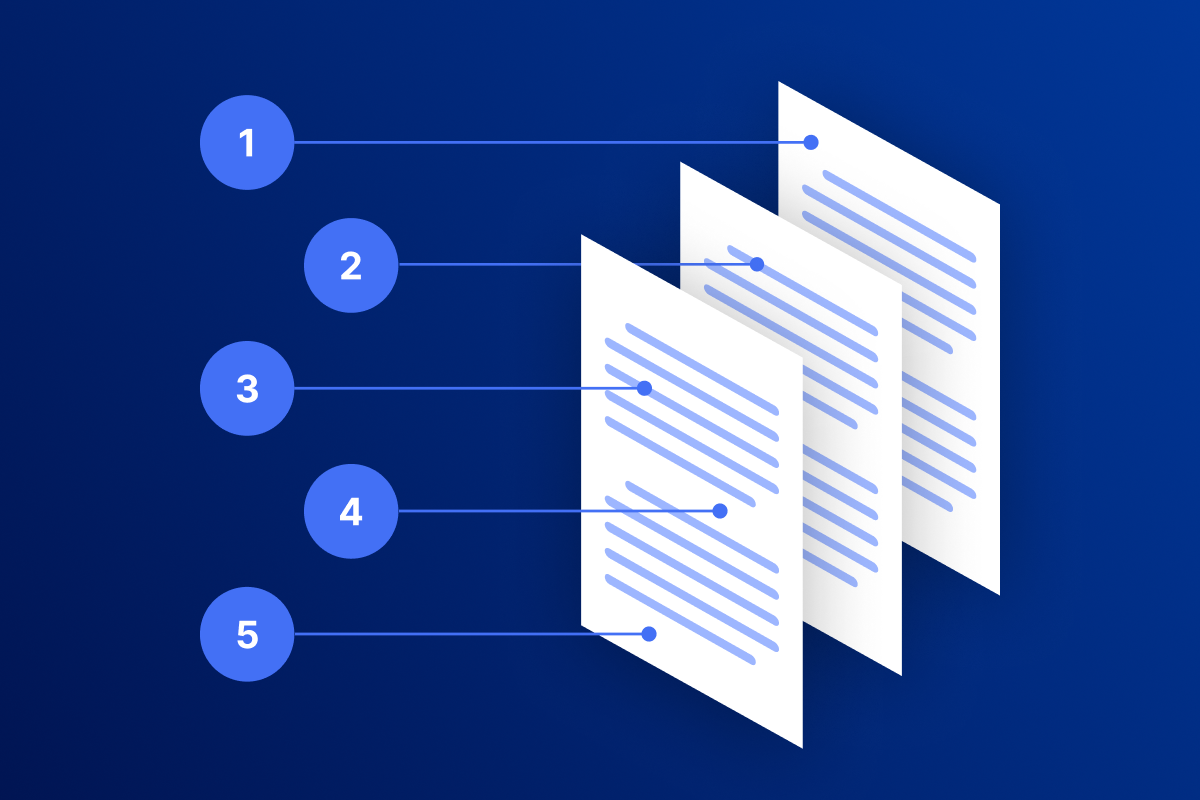
Crafting a comprehensive demand package is critical for successful settlement negotiations. While good personal injury demand letters are thorough and well-written, great demand packages that are designed for maximum settlement typically include the following:
Leading personal injury law firms consistently deliver great results by implementing systems of scale that ensure excellence. These systems increasingly rely on AI-enabled workflows to meet the needs of a growing firm.
EvenUp began as such a system. After years of development, the Demands™ tool delivers a 69% higher likelihood of reaching policy limit settlements. EvenUp offerings now extend beyond demand package tools to encompass the entire lifecycle of a personal injury case—helping you break through common industry benchmarks and reach your full law firm revenue potential. That said, it all depends on a well-crafted demand.
Check out these five steps—plus two bonus recommendations—to learn how to streamline demand drafting in PI litigation. Ensure your demand package process is built to maximize settlement amounts.
Demands don’t just tell a story—they build a case. See how EvenUp demands provide a 69% higher likelihood of tendering policy limits.
Get Demand
A demand package in a personal injury case is a comprehensive set of documents that a plaintiff’s legal team sends to the insurance company or opposing counsel to initiate settlement negotiations. It outlines the case, establishes liability, and provides evidence supporting the injured party’s claim for compensation.
So, what is a demand package in a personal injury case—and why is it so important? At its core, a settlement demand package is your first and best opportunity to present the full value of your client’s claim. A well-constructed demand package for settlement typically includes:
The goal is to clearly articulate the impact of the injury and justify the compensation being requested. A strong demand package can lead to faster settlements and higher payouts, avoiding the delays and costs of litigation—especially for car accident demand letters, also known as motor vehicle accidents (or MVAs).
In high-volume personal injury firms, creating these packages efficiently—without sacrificing quality—can make or break your law firm profit margins. That’s why many leading firms are adopting legal AI solutions like EvenUp to streamline and standardize demand package creation. By automating the drafting process and ensuring all relevant documentation is included, EvenUp empowers firms to produce polished, persuasive demand packages at scale.
Understanding what a demand package is in a personal injury case helps firms prioritize this critical part of the claims process—and maximize case value from the start.
Here are five steps for creating comprehensive, high-quality demand packets for all your cases—be sure to check out the two bonus recommendations as well:
In most motor vehicle incidents, the police create a report about the incident. While typically inadmissible, police reports inform the theory of liability for car accident demand letters. If the officer says the other driver caused the incident, you can use the report to help settle the claim outside of litigation/pre-suit. Insurance companies usually give considerable weight to police reports.
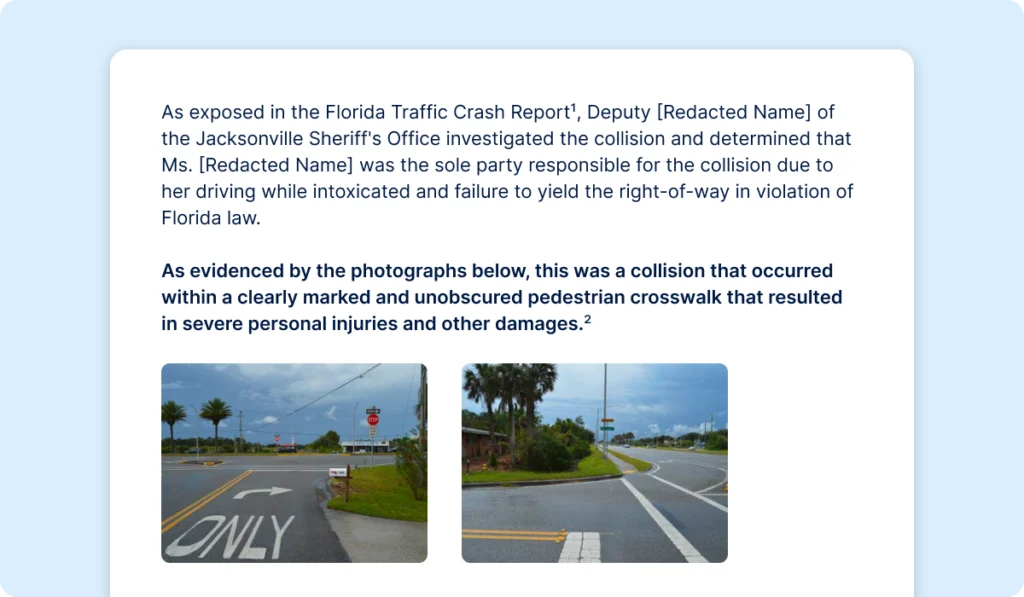
The most important parts of the police report that you want to expose in your demand package include:
When you think about how to value a personal injury case, it starts with a strong understanding of the medical records. Compiling, sorting, and summarizing medical records and bills can help build a strong case for fair compensation. These documents provide evidence of injuries, treatments, and costs. Understanding how to prepare a medical chronology by organizing this information in a timeline or calendar setting is critical—making it easier to demonstrate the extent of damages and justify the need for compensation. It also makes a stronger case when adjusters review.
Below are a few guidelines for building a persuasive and easy-to-read legal medical summary:
It’s critical that your firm has systems in place to account for all medical bills and eliminate any missing documents for every case. According to EvenUp’s industry benchmarks report, personal injury firms are missing five documents on average for every ten cases. With each settlement potentially costing $3,000 in lost settlement value, these missing medical bills and records significantly reduce total potential economic damages.
Many elements of economic loss may be claimed, most importantly, out-of-pocket expenses and loss of earnings. To present loss of earnings calculations, construct a complete model that considers:
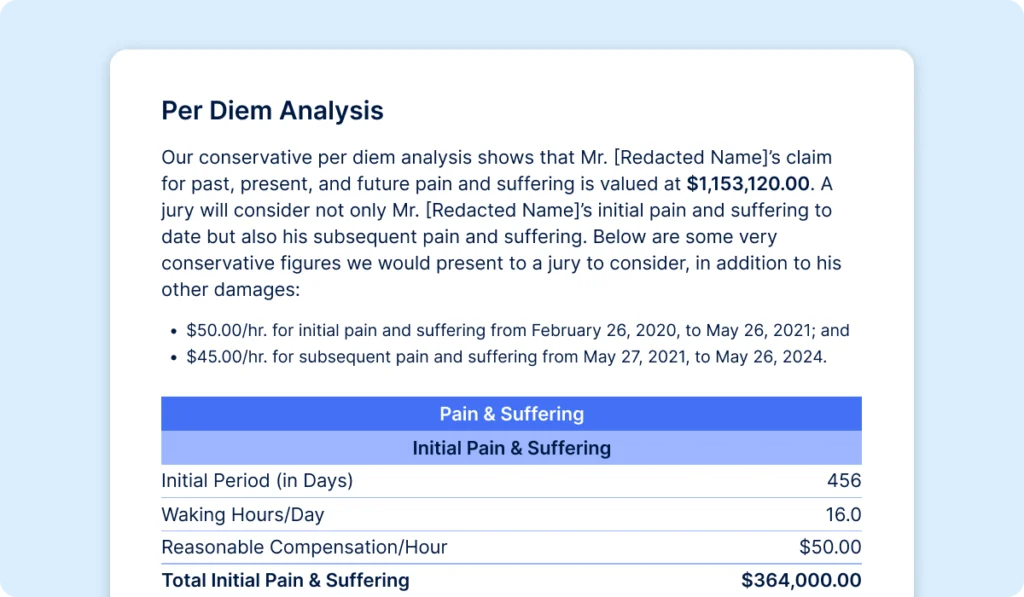
To build your claim for non-economic damages, start by looking at the jury instructions in your area, given that states vary on how an attorney may present a client’s non-economic damages, including past and future pain and suffering. Identify all the elements of the non-economic damages for which you can seek compensation.
Prepare and share a pre-demand questionnaire with your client regularly. This can help to ensure that you capture all of your client’s ongoing complaints, along with the impact your client’s injuries have (and may continue to have) on their life. This information illustrates the specific loss of enjoyment and/or “duties under duress” that your client endured and provides a way to document future impacts that your client may encounter in the foreseeable future.
There are three ways to estimate pain & suffering:
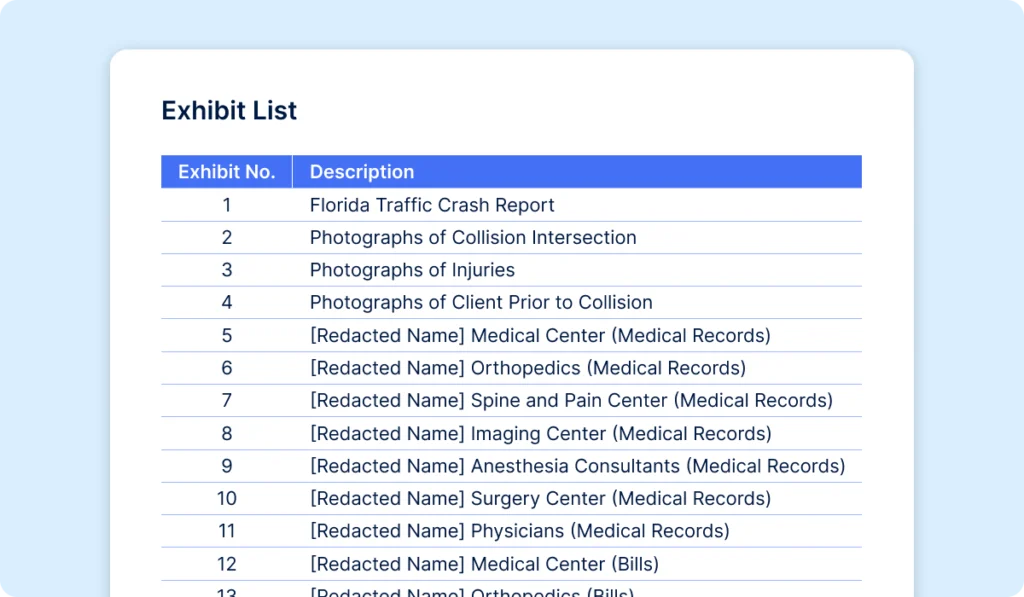
With so many medical records, bills, and other supporting documentation in the demand package, it’s essential to make it easy for you, your staff, and the claim adjuster to navigate the exhibits. Develop a master index of each exhibit.
Having a structured, organized system will help claim adjusters review and extract the relevant information they need to support your claim.
These five steps will get you far, but there are two additional recommendations to consistently maximize your outcomes.
While it’s crucial to present a strong case backed by evidence, it’s equally important to humanize the plaintiff in your demand package. By humanizing the plaintiff, you transform them from a claimant into a relatable individual with dreams, setbacks, and a compelling story.
This personalized approach not only enhances the adjuster’s understanding but also cultivates empathy, laying the groundwork for fair and just negotiations. Here are a few ways to paint a vivid picture of your client throughout the demand letter:
By compiling a demand package that demonstrates the strength of your case, in addition to the true losses suffered by the plaintiff, you will increase the likelihood of a favorable settlement.
At EvenUp, our team—which includes former defense counsel, paralegals, and case managers—works with leading personal injury firms to prepare demand packages that include pain and suffering narratives that help depict the plaintiff before and post-incident, save time, and settle cases for higher amounts (our modern law firm analytics showcase how EvenUp demands have a 69% higher likelihood of hitting policy limit.)
EvenUp’s Demands™ is an AI tool purpose-built for personal injury law firms. It enables you and your staff to create a more efficient and consistent demand packet process.
Your client’s cases are often once-in-a-lifetime events with life-altering stakes. They deserve every advantage you can muster toward their cause. These steps are great best practices that you and your team can run at and optimize around. As it applies to adopting AI-enabled assistance, EvenUp strives to deliver the justice every plaintiff deserves via the advantages provided to you with our unique combination of advanced technology and human expertise.
EvenUp’s Express Demands™ goes a step further and turns around your demands in minutes—transforming raw, disorganized files into polished, high-quality demands. Firms no longer have to compromise between quality, speed, and convenience—allowing them to focus on achieving the best outcomes for their clients.
With Express Demands™, PI firms can:
Express Demands™ is one of many capabilities of AI Drafts™, EvenUp’s generative AI designed for drafting legal documents across the case lifecycle. Similar to how EvenUp’s Case Companion™ operates as a legal AI assistant to analyze and answer questions from your case files, AI Drafts™ combines endless generative capabilities with templated legal documents common throughout personal injury cases—automatically bringing the case context into every document. Documents include everything from responses to interrogatories to internal memos, all drafted in minutes with case context to ensure a personalized and accurate draft every time.
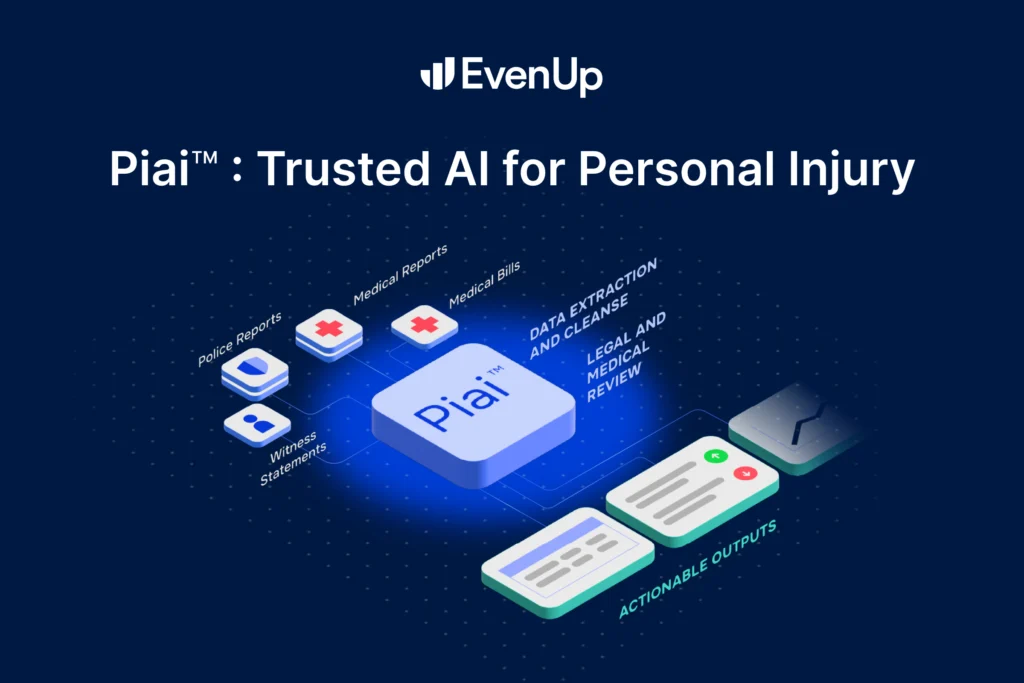
If you’re concerned with how accurate legal AI is, EvenUp can soothe your worries. AI Drafts™ along with the rest of EvenUp’s Claims Intelligence Platform™ is powered by Piai™, EvenUp’s industry leading system of personal injury AI models—featuring the largest PI dataset and backed by a structured repository of third-party statutes combined with deep personal injury expertise. Piai™ is verticalized AI done right so your team can focus on deepening relationships with plaintiffs and optimizing caseload management.
In the fast-evolving landscape of personal injury law, leveraging the latest technology is no longer optional—it’s essential. Your clients are facing life-altering events—often going through dark days—and insurers are deploying advanced tools to minimize payouts. Firms must adapt to remain competitive and encourage the most fair settlements for their clients. AI-enabled solutions like EvenUp’s Demands™ and Claims Intelligence Platform™ empower firms to streamline workflows, reduce human error, and ensure consistency across cases.
Adopting these tools can help you and your team craft stronger demand packages and better serve clients by delivering more precise, data-backed theories of damages. Legal AI systems improve cash flow by shortening settlement timelines and maximizing returns through well-supported claims that resonate with adjusters and juries alike.
Investing in the right technology positions your firm to achieve superior outcomes, uphold the highest standards of client advocacy, and maintain a competitive edge in an increasingly demanding industry. The future of personal injury law belongs to those who are prepared to innovate and deliver justice more effectively than ever before.
Schedule a call today to learn more.
Schedule a call today to see how EvenUp's AI tools automate repetitive tasks, streamline custom drafting, and empower staff to focus on case strategy and client engagement.
Schedule a call
Read Now

Read Now

Read Now

Read Now