The best personal injury case management software is purpose-built for PI. It does more than organize files. It closes cases faster and puts more money in your clients’ pockets.
Most personal injury case management software was built for general practice. That is the core problem. PI firms need tools designed around the unique demands of injury pre-litigation and litigation: medical records, winning demand packages, lien tracking, and settlement timelines.
This guide defines what separates the best personal injury case management software from generic alternatives, gives you a criteria framework for evaluating any platform, and shows what purpose-built PI software looks like in practice.
For a personal injury firm, “best” is not about the longest feature list. It is about whether the platform reduces time-to-demand, protects case value, and scales the firm’s output without adding headcount. A platform that organizes files but does not move cases forward is not the best choice. It is an expensive filing cabinet.
The best personal injury case management software does five things at minimum:
If a platform cannot do all five, the firm is leaving revenue on the table.
General practice tools serve a broad market. They handle basic matter management, time tracking, and billing across every practice area at once. That breadth is the problem. Personal injury litigation has operational demands that horizontal software is not built to address.
PI cases require deep integration with medical data. They demand intelligent document assembly for demand letters. They rely on fast, accurate case valuations grounded in comparable settlements. None of that exists in a platform designed to serve family law, estate planning, and criminal defense simultaneously.
The result is that firms using generic tools still rely on manual processes for their most time-consuming work. The single biggest time drains in PI operations, medical record review and demand preparation, are exactly the areas horizontal platforms do not touch. The technology is not the bottleneck. The wrong technology is.
The case management category is splitting in two. On one side are horizontal platforms that serve every practice area. On the other are purpose-built systems designed around a single practice area’s data, workflows, and economics. For personal injury, the difference shows up across every core capability.
| Capability | Generic Practice Software | Purpose-Built PI Platform |
|---|---|---|
| Medical record analysis | Manual review, hundreds of pages per case | Automated chronologies in minutes |
| Demand drafting | Static templates | Data-backed AI drafts grounded in case facts |
| Case valuation | Not supported | Grounded in comparable settlement data |
| Treatment gap detection | Not supported | Flagged automatically before demand |
| Client communication | Manual outreach | Automated, personalized check-ins |
| Workflow design | Generic matter management | Built around the PI case arc |
| Underlying data | None PI-specific | Trained on PI case data at scale |
The differentiator is not the number of features. It is the data and intelligence powering them. A platform trained on millions of PI case data points can predict case values, identify missing medical evidence, and generate demands that reflect real-world settlement patterns. A generic tool cannot, because it was never built to.
When comparing platforms against the criteria above, these are the four capabilities that separate the best PI software from the rest.
Medical Record Management. The software should ingest, organize, and summarize medical records automatically. Manual review of hundreds of pages per case is the single biggest time drain in PI operations. Look for platforms that parse records by provider, flag gaps in treatment, and build chronologies without paralegal hours.
Demand Package Automation. The demand process is where most firms lose time. The platform should generate demand letters grounded in case facts, medical evidence, and comparable settlement data. Not templates. Intelligent drafts that reflect how similar cases actually settle.
Workflow and Task Automation. Every PI case follows a predictable arc. The software should automate task assignment, deadline tracking, and status updates across that arc, with custom workflows tailored to each case type.
Client Communication. Clients want updates. Staff do not have time to call every client every week. Evaluate whether the platform offers automated, personalized communication that keeps clients informed without pulling staff away from case work.
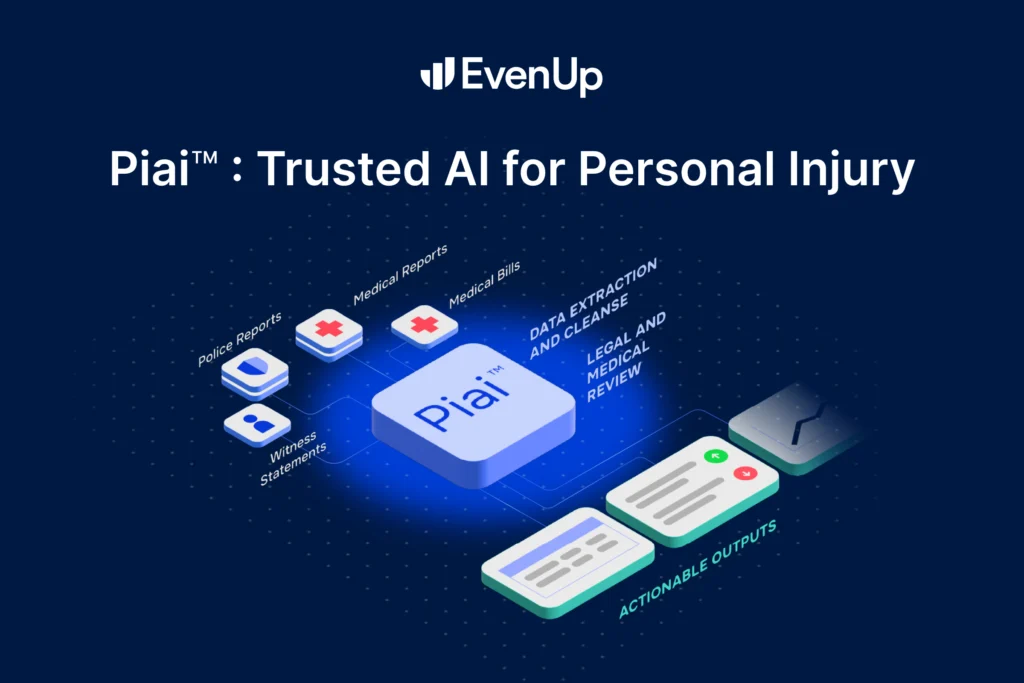
EvenUp built the Claims Intelligence Platform specifically for personal injury. It is not a general practice tool with a PI add-on. Nearly 2,000 PI firms nationwide use it to move cases faster, powered by the industry’s largest PI dataset. Measured against the five criteria above, here is how a purpose-built platform delivers.
AI Drafts generates demand packages grounded in medical evidence, case facts, and comparable settlement data. Firms send demands faster because every draft is built on real PI data, not generic templates [FLAGGED: “62% faster than industry average” stat from prior version removed pending clearance; reinsert only if confirmed].
MedChrons ingests medical records from any provider and builds organized chronologies automatically. What used to take paralegals hours takes minutes. Treatment timelines, provider summaries, and gap analysis are handled by the platform, freeing the team for case strategy rather than data entry.
AI Playbooks and Smart Workflows let firms define how every case type moves from intake through settlement. The platform automates task routing, deadline management, and status tracking so cases do not stall in handoffs.
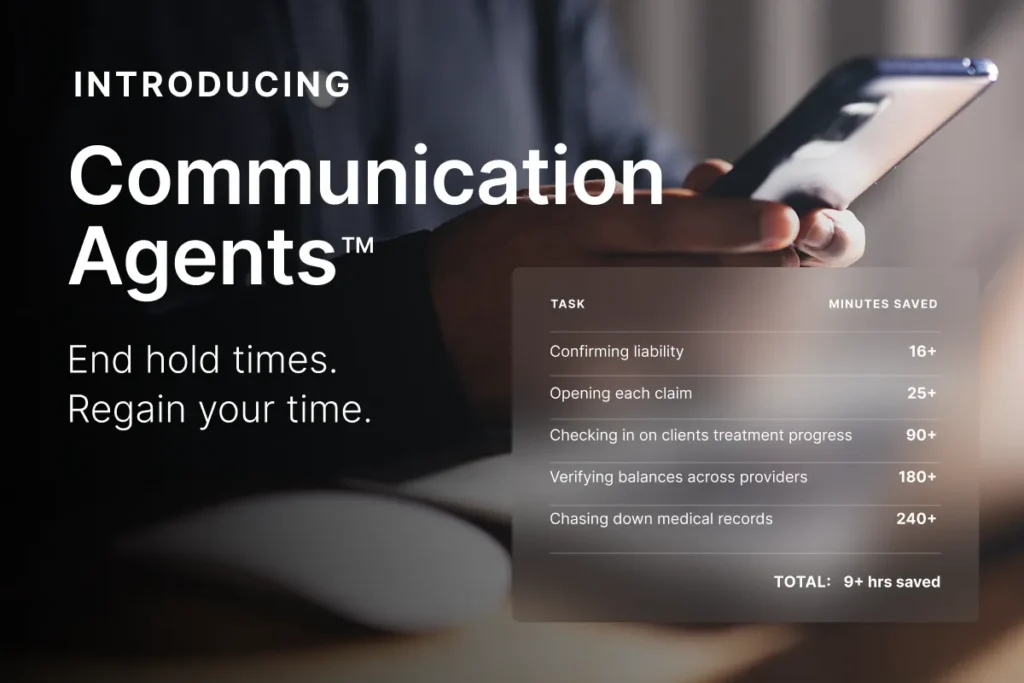
Communication Agents keep clients updated on case progress without pulling staff into repetitive calls and emails. Clients stay informed. Staff stay focused on high-value work.
On security, any platform handling medical records must meet the highest standards. EvenUp is SOC 2 and HIPAA certified, protecting client data at every stage.
For a closer look at how purpose-built tools handle specific stages, see the guides on medical records retrieval, demand preparation, and reducing overhead through AI workflows.
Evaluating new software is a significant decision. Start by auditing the current workflow. Where are the biggest delays? Where does the team spend the most manual hours? Those answers usually point to medical records, demand packages, or client communication, which are exactly the areas where purpose-built PI software delivers the highest return.
The firms pulling ahead treat case management software as a growth lever, not just an organizational tool. The best personal injury case management software is the one engineered around how PI cases actually move.
Evaluating new software is a significant decision for any firm leader. That’s why EvenUp has put together a collection of AI change management resources to help ease adoption.
The firms pulling ahead treat case management software as a growth lever, not just an organizational tool. A PI-specific platform delivers the highest ROI in each of those areas.
Schedule a call to see how the Claims Intelligence Platform™ can accelerate your firm’s case pipeline.
The best PI case management software is purpose-built for personal injury rather than adapted from general practice tools. It automates medical record analysis, generates data-backed demand packages, tracks case milestones, manages client communication, and surfaces bottlenecks before they stall the pipeline. The key differentiator is PI-specific data and intelligence, not the size of the feature list.
General platforms like horizontal practice management tools serve every practice area at once and are not built for the unique demands of PI: medical record integration, intelligent demand drafting, and settlement-grounded case valuation. Firms using generic tools still handle their most time-consuming work manually.
Prioritize medical record management, demand package automation, workflow automation, and client communication. These four areas represent the largest time drains in PI operations and the highest-return opportunities for automation.
Purpose-built PI platforms can improve outcomes by reducing treatment gaps, ensuring complete documentation before demand, and grounding demand valuations in comparable settlement data. Better-prepared cases with complete records and rigorous damages analysis consistently support stronger settlement positions.
The best platforms are SOC 2 and HIPAA certified, which is the standard any software handling protected health information and case data should meet. Confirm both certifications before adopting any platform.