EvenUp Law
August 3, 2026

If you’re like most personal injury firms, you’re facing a monumental decision on whether to build your own AI solution or buy a legal AI platform purpose-built for personal injury work. The costs that matter here don’t show up in the first comparison, and by the time they do, you’re months in.
The instinct to build is understandable. General-purpose models are capable and cheap to start with, and a firm that has technical talent can stand up something that demos well. But a demo is not a workflow, and the gap between the two is where the real cost of building lies.
Firms need more than what ChatGPT or Claude can deliver, even with someone dedicated to managing the prompts and workflow.
On-demand webinar about how building your own AI stack means owning every risk that comes with it. A 26-minute look at what general-purpose AI actually costs a PI firm.
Watch Webinar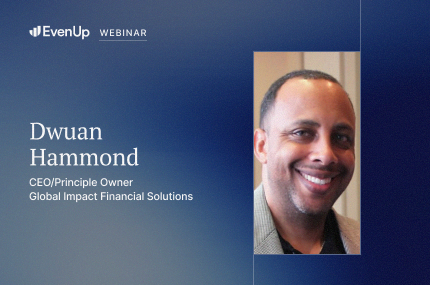
Most firms are not making a deliberate build-vs-buy decision at all. Their people are using whichever general-purpose tool is easiest to reach, and the firm is inheriting that choice without having made it.
The headline numbers from the 2026 legal AI research tell a story most firm leaders will recognize. Use of general-purpose AI tools has surged, with nearly 70% of legal professionals now using tools like ChatGPT for work. Legal-specific tools are also on the rise, but their adoption tells a familiar story:
Firm-wide AI adoption is up year-over-year, but the lag between individual adoption and firm-wide adoption, as well as the lag between legal AI vs general AI usage, shows how many firms are still letting the decision get made for them by default.
Choosing to build is at least a decision. But it is one that should be made with the full cost in view.
Building on a general-purpose model may start cheap. The API access is inexpensive, the initial prototype comes together quickly, and the running cost per query looks trivial next to a platform subscription. This is the number that makes building look smart in a spreadsheet.
The problem is that this number is the smallest cost you will pay, and it is the only one visible at the start.
A general-purpose model does not understand personal injury work out of the box. It does not know how your firm frames causation, what belongs in a demand, how to read a treatment timeline, or which details move an adjuster.
Training it to do these things reliably is not a one-time build. It is continuous work that includes prompt engineering, correcting errors, updating the system as models change underneath you, and checking output case after case because the system cannot yet be trusted to run unattended.
That work has to be done by someone, usually a capable person whose time is worth a lot. That’s the cost most build-vs-buy comparisons miss entirely: not what you built, but who’s stuck maintaining it instead of doing higher-value work.
Consider some hypothetical math. If maintaining a homegrown legal AI tool consumes 20 hours a month of a lawyer’s time, and let’s say the average U.S. lawyer bills at roughly $349 an hour, that is about $84,000 a year in opportunity cost alone, before counting the technical staff, the errors that slip through, and the cases that move more slowly because the system is not yet reliable.
There is a simpler way to see this decision, and it shows up in how a firm categorizes the spend.
General-purpose AI has a place in a law firm. Treated as a line item alongside the other subscriptions, it delivers lift: incremental gains, more output from the same people, doing what they already do slightly faster.
Vertical AI platforms built for personal injury work occupy a different category. It functions as a digital workforce, and the honest way to think about it is closer to salary and compensation than to software. What it delivers is scale: structural growth, more capacity without adding headcount.
The distinction matters because the category sets the expectation. A firm that files AI under general expenses will evaluate it on price and use it lightly, and it will get lift. A firm that treats it as workforce capacity will give it a job, a target, and a place in how the firm grows, and it will get scale. Which category you choose also decides how the build question resolves. A tool you expect lift from is worth building yourself if you have the talent. Capacity you intend to scale on is worth buying from someone whose only job is to keep it running.
The build approach carries a second cost that is harder to quantify and more dangerous to ignore: accuracy. General-purpose models produce fluent, confident output whether or not it is correct. In legal work, that is precisely the wrong failure mode.
The risk is not hypothetical. A federal judge in Wyoming sanctioned attorneys from a national personal injury firm after they filed a brief containing AI-generated citations to cases that did not exist. The firm had access to significant technical resources. The failure was not a lack of sophistication. It was the gap between a model that produces plausible text and a system built to produce accurate legal work, verified against the record.
EvenUp treats accuracy as the core of the product, not a layer bolted on afterward. Every factual claim is tied to the source record, with line-level citations designed to be inspected rather than trusted blindly. Outputs are rooted in firm standards and best practices. That is not something a firm building on a general-purpose model gets for free. It is something the firm would have to build and maintain itself.
The case for buying is not that building is impossible. Firms with real technical talent can build. The case for buying is that a purpose-built platform moves the entire ongoing burden (maintenance, model updates, accuracy correction, domain knowledge) off your team and onto a vendor whose only job is to carry it.
Buying a purpose-built platform plants you on the leading edge of AI capabilities. For example, EvenUp is at the forefront of developing and refining AI Agents that specialize in managing tedious tasks. This is an iterative process, where every application across every firm refines the agents and future capabilities.
Build it alone, and your platform only ever learns from your own firm’s cases. That is a trade at the heart of the decision. When you build, you own the maintenance and future development forever. When you buy, you rent the capabilities and leading-edge evolution while keeping your people focused on law.
For most firms, the second trade is the better one, because building legal AI is not the business they are in.
The firms that will pull ahead over the next few years are not the ones with the cleverest homegrown tools. They are the ones that made a deliberate choice about where their people’s time creates the most value, and refused to spend it maintaining infrastructure a vendor could carry for them.
Before you commit either way, five questions will tell you where your firm actually stands.
Answer these honestly, and the decision usually makes itself.
The common, and expensive, assumption is that building your own AI stack will save money or create a competitive advantage. In practice, the hidden costs outweigh the perceived benefits, and they surface months after the decision is made: ongoing development, testing, and support, the security and confidentiality obligations that come with client data, and the attorney and staff hours diverted from serving clients to maintaining software.
The firms seeing the most success spend less energy on owning technology and more on using purpose-built AI already proven in legal work. That lets them scale operations, hold quality consistent across matters, reduce risk, and give their teams back the time that belongs to practicing law.
Schedule a call today to see how EvenUp's AI tools automate repetitive tasks, streamline custom drafting, and empower staff to focus on case strategy and client engagement.
Schedule a call
Read Now

Read Now

Read Now

Read Now