Medical record retrieval is the process a personal injury firm uses to request, track, receive, and verify a client’s medical records and bills from every provider who treated them. It starts with a signed HIPAA authorization, runs through a request and follow-up with each provider, and ends with a complete, certified set of records the firm can build a medical chronology and a demand on.
Retrieval is the longest wait in most pre-litigation cases. Providers answer on their own schedule, requests get lost, and the record you receive is often incomplete. Every missing record is a gap the adjuster can use, so the speed and completeness of retrieval shape how fast a demand goes out and how well it holds up.
This guide covers what to request, what an authorization needs, how long retrieval takes, what it costs, a five-step process, where retrieval breaks down, and how to choose between handling it in-house, using a retrieval service, or automating the follow-up.
Medical record retrieval is obtaining complete medical documentation from healthcare providers for use in a legal claim. In personal injury, that means two separate sets of documents from each provider: the medical records, which describe the care, and the billing records, which price it.
A complete request for an injury case usually covers seven kinds of documents:
Records and bills come from different departments, often on different timelines. A provider can send a full chart and no bill, or a bill with no chart. Request both explicitly and track them separately.
Get a real-world look at how PI firms are putting AI to work across the full case lifecycle, including intake, medical management, litigation, and settlement strategy.
Watch Now
Before suit, a firm requests records under a HIPAA authorization signed by the client. Under 45 CFR 164.508, a valid authorization has six core elements:
The form also has to tell the client they can revoke it, whether treatment depends on signing it, and that disclosed information may be redisclosed. It has to be in plain language, and the client gets a copy. Once a case is in suit, records can also come through a subpoena or court order. HIPAA allows that disclosure under 45 CFR 164.512(e), with conditions on notice or a protective order.
It depends on who asks. When a patient requests their own records, HIPAA gives the provider 30 days to respond, with one 30-day extension if the provider explains the delay in writing (45 CFR 164.524). Many states set shorter deadlines.
Requests a firm sends under a client’s authorization follow the provider’s own process and state law, and in practice they often take longer. A request can sit for weeks before anyone opens it, then come back incomplete. The firms that get records fastest don’t have special access. They follow up on a fixed schedule from the day the request goes out.
Records for a client still in treatment also keep changing. A set pulled in month two is out of date by month six, so plan for at least one update request before the demand.
Copy fees depend on who makes the request:
Some firms have the client request their own records to get the patient rate. If you do, make sure the client understands the request and the records reach the firm intact.
The fee is rarely the biggest cost. Staff time spent following up, and the weeks a case sits waiting for one missing provider, usually cost more.
Start from intake, then keep looking. Clients forget providers, especially one-time visits like an urgent care stop or an imaging center. Cross-check the client’s list against EMS reports, referral notes, pharmacy records, and every bill that comes in. A provider found during demand drafting costs far more time than one found at intake.
Have the client sign a HIPAA-compliant authorization at intake that covers every provider for the incident, plus separate forms for psychotherapy notes or substance use records when they apply. Check expiration dates, because a long case can outlive its authorization.
Send each provider a request that names the client, the date range, and the records you need. Ask for itemized bills and medical records in the same request, state the format you want, and ask for a records custodian’s certification if you might need the records in court. Large health systems usually route requests through a central records department or an outside release-of-information vendor. Smaller practices often handle them through the office manager.
This is where most retrieval fails. Log each request with the date sent, the expected response date, and the contact at the provider. Follow up on a fixed schedule, not when someone remembers. Escalate to the records supervisor or compliance officer when a request stalls, and re-send lost requests the same day you learn they’re lost.
When records arrive, check them before filing them away. Confirm the date range matches the request, every visit on the bill has a matching record, images and results are legible, and nothing is cut off. Records that come with a custodian’s certification can qualify as business records under Federal Rule of Evidence 803(6) and be self-authenticating under 902(11), and most states have an equivalent rule. Request what’s missing right away, while the client is still treating with that provider.
Five problems account for most retrieval delays:
Each one widens the gap between the care the client received and the care the file documents. Gaps like that read to an adjuster as treatment gaps, even when the client never missed an appointment.
Firms use five approaches, and most combine two or three.
| Approach | Strength | Weakness | Best fit |
|---|---|---|---|
| In-house staff | Full control and direct provider relationships | Follow-up competes with every other task on a busy caseload | Lower-volume firms with dedicated records staff |
| Medical record retrieval services | Nationwide coverage, provider relationships, and certified copies | A per-request fee, and the records still need review when they arrive | Out-of-state providers, hard-to-reach facilities, and certified copies for litigation |
| Provider portals and direct electronic delivery | Fast where available | Coverage is uneven, and portal exports are often incomplete for legal use | Large health systems with established release processes |
| AI agents for follow-up | Every open request gets chased on schedule, and status logs to the case file | Agents follow up on requests; a person still handles exceptions and escalations | Firms whose bottleneck is follow-up volume |
| Managed pre-litigation service | Specialists run records work as part of the full pre-litigation process | Scope covers pre-litigation | Firms that want to hand off pre-litigation volume |
Ask five questions before you sign with a retrieval company:
Retrieval delivers paper. The case needs a usable record.
Software can now summarize thousands of pages of medical records and flag what’s missing. For how firms compare those tools with review services, see the guide to medical record review services.
EvenUp works on the two parts of retrieval that take the most staff time: chasing requests and checking what came back.
Firms that want the whole pre-litigation process handled, records work included, can use Pre-Litigation as a Service.
See how Lerner & Rowe is Lowering Time on Desk by 90 Days with PLAAS, EvenUp’s Pre-litigation As A Service.
Watch Now
An adjuster can only credit the care the file documents. A missing provider, a chart without its bill, or a records set that stopped three months before treatment ended all shrink the documented case, and none of them shows up until someone looks for it.
Firms that retrieve records well don’t have better access to providers. They identify every provider early, request records and bills together, follow up on a schedule, and check every production for completeness the day it arrives.
Enter your caseload and turnaround times to see where capacity is going. Results are free, and no form is required to start.
Calculate Now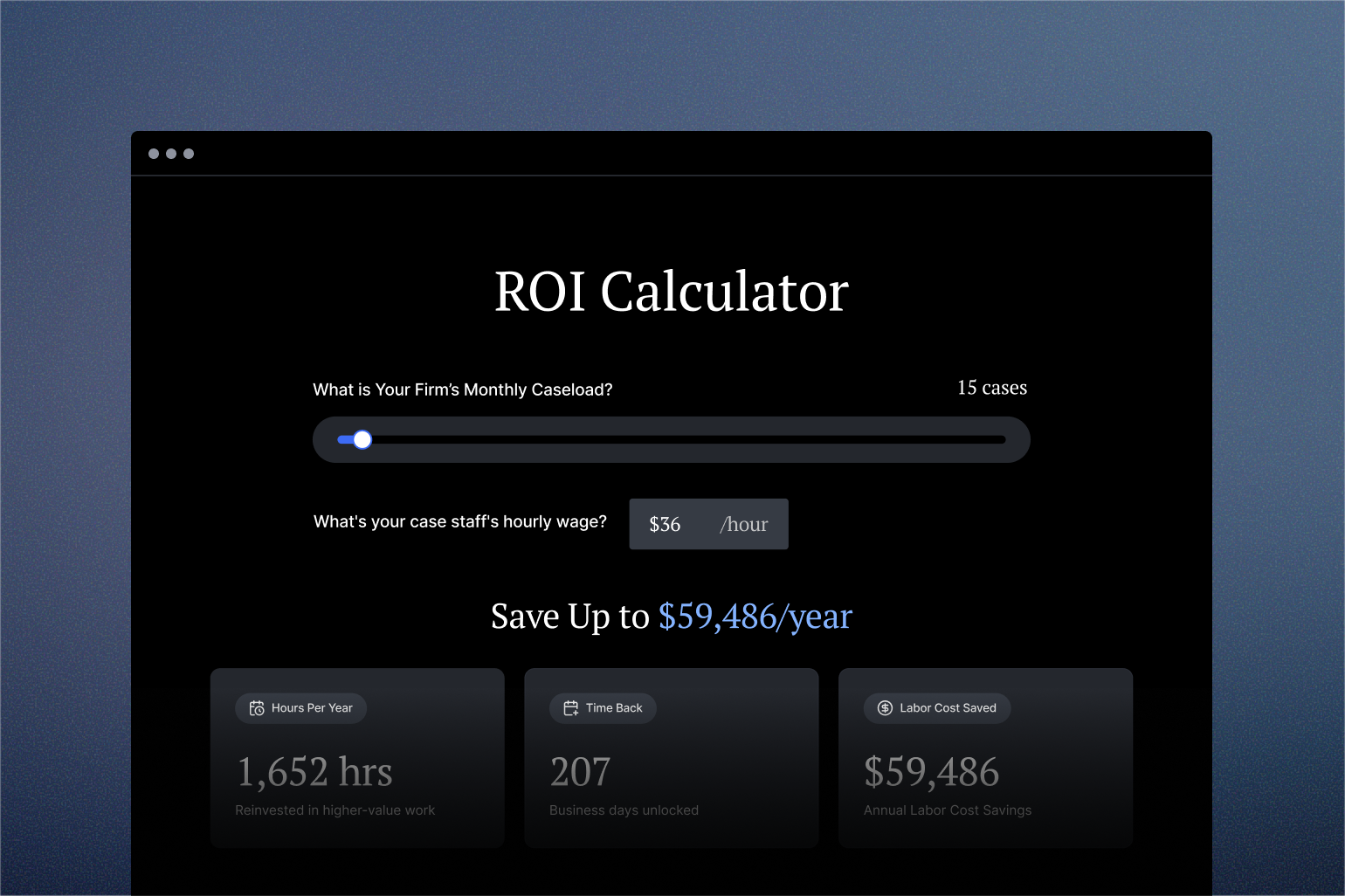
Under HIPAA, a provider has 30 days to answer a patient’s own request, with one 30-day extension. Requests from a law firm under a client’s authorization follow the provider’s process and state law, and they often take longer. Following up on a fixed schedule is the most reliable way to shorten the wait.
Before suit, a firm needs the client’s signed HIPAA authorization. Once a case is in litigation, records can also come through a subpoena or court order, which HIPAA permits under 45 CFR 164.512(e) when notice or protective-order conditions are met.
HIPAA limits patients to a reasonable, cost-based fee for their own records. Requests from law firms fall under state copy-fee laws, which vary widely, and retrieval services add their own per-request fee.
Medical records describe the care: visits, diagnoses, tests, and treatment. Medical bills price it, usually on a UB-04 for facilities and a CMS-1500 for professional services. A demand needs both, and providers often send them separately.
It’s a company that requests, tracks, and delivers medical records for law firms, usually for a per-request fee. Services are strongest on out-of-state providers, hard-to-reach facilities, and certified copies for litigation.